Brew in a bag is one of the best ways for a new brewer to start all-grain brewing. You don’t need a lot of additional equipment. It doesn’t take a lot of space and it’s easy as making a giant batch of tea. If you think it’s time to move on from extract brewing but don’t know where to start, brew in a bag is a great way to do it.
Brew in a bag is a perfect starting point for new brewers who are looking to move to all-grain brewing but don’t want to spend a lot of money on a three-vessel system. It’s also much less intimidating than all grain brewing techniques. If you already have a large stockpot you might only need a couple of more things to start brewing your very first brew in a bag, all-grain beer. For another easy way to brew beer at home Making Beer At Home – Extract Brewing.
Things to do before you start
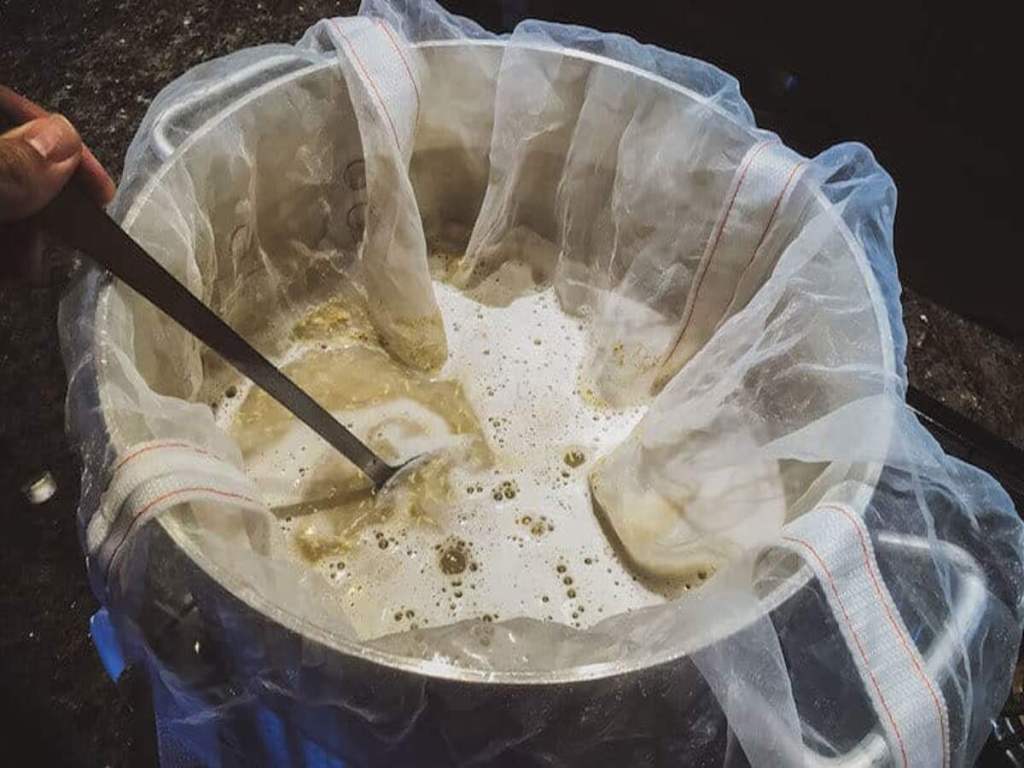
The main idea about brew in a bag is that instead of three vessels that hold the liquid you do it all in one kettle. You use a mesh bag to hold crushed grains and then steep them in hot water to extract the sugars creating the wort. If you have ever done a partial extract kit then you have already done a smaller form of brew in a bag. In fact, most of the time you have been given a small muslin bag to add your specialty grains. The difference is that instead of using extract to make the base of your wort you’re going to create the full wort by using all crushed grains that you steep in a much larger bag.
The beauty of brew in a bag is that it’s all done in one vessel or kettle. That means that at the end of brew day you only have one pot to clean. At the very core of brew in a bag, you only need two things to get started. The kettle and the brew bag.
The size of the kettle will determine how big of a batch of beer you’re looking to make. In general, you need to add a little bit more than your desired final volume to account for losses. Those losses include Grain Absorption Rate and Boil Off Rate.
Grain Absorption Rate is the amount of liquid the crushed grains will soak up when you add them to your kettle. Most brewing software has an estimate for this but generally, it’s about 0.12 quarts per pound of grain. For 5.5 gallon batch, it can be up to 1 gallon.
Boil Off Rate is dependent on how vigorous and how long you boil. The only way to know this is to test out a boil with water in your kettle. Set a timer for 30 minutes and see how much is boiled off. Then make a note for future batches.
The Process
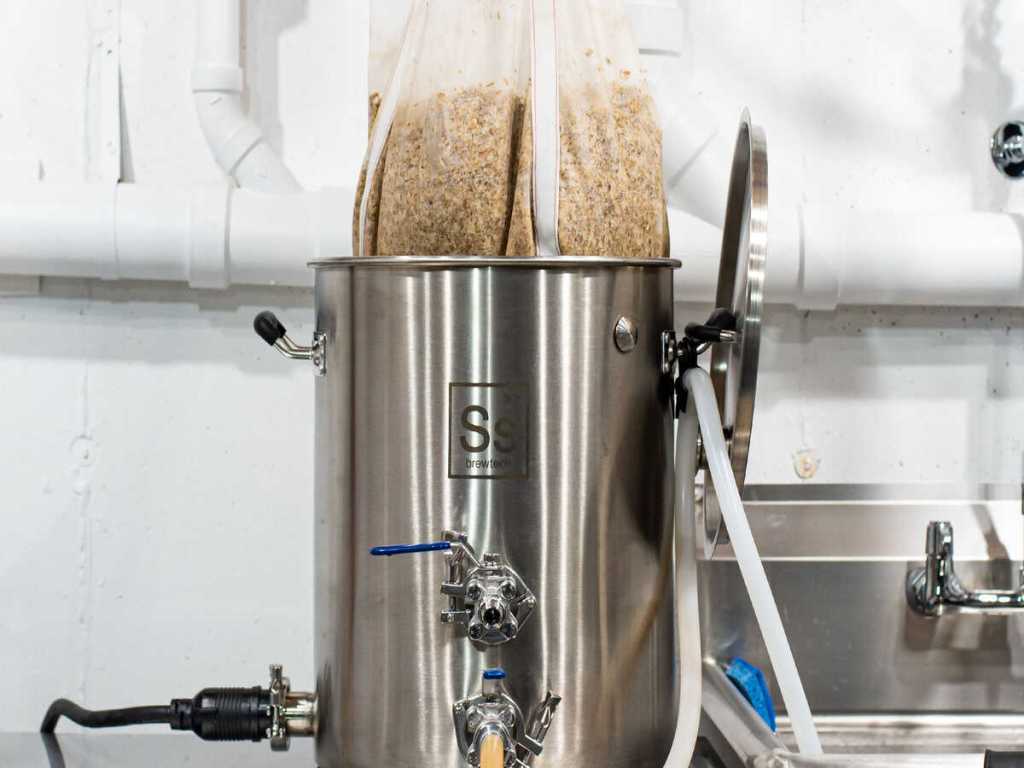
Brew bags can be made from fabric, muslin, or nylon. Make sure to get one that fits your kettle the best. Start by collecting all your ingredients. If you don’t have the kettle space to add the amount of water needed you can always add less water and make a more condensed wort and then add more water later.
With the water in the kettle, it’s time to heat it up for mash. Mashing is when we steep the grains in hot water to convert the starches in the malts to fermentable sugars. The temperature range in which you mash can have many impacts on your brew. The range you are aiming for is 145-158 degrees F. (62.7-70 degrees C).
The lower you mash the more fermentable sugars you will get. Meaning a stronger but lighter body beer. The higher you mash the less fermentable sugars you will get. Meaning a sweeter and fuller beer. So once you have decided on what temperature you want to mash at, you just need to heat your water to slightly above that number.
Once you add the grains the temperature will drop slightly so give yourself a 5-10 degrees buffer to help you land on your ideal mash temperature. With your water up to temperature turn off the heat and add the crushed grains.
First, add in your brew bag, then slowly add your grains. You want to go slow so that you don’t get dough balls. Which is when grains clump together and create pockets of malt that are not getting saturated. This will lower your extraction of sugars and you won’t get the most out of your grains. Once all the grains are in, set a timer for the mash. Anywhere from 20 to 60 minutes depending on how long you want to wait. Occasionally stirring is a good thing to keep the mash temperature consistent throughout.
After the mash timer goes off you can now pull out the grains. Let the bag drain above the kettle. If you want to get the most flavor you can sparge or rinse the bag with some warm water. If you were not able to add your full volume of water at the beginning this is the perfect time to add it in as sparge water. After you discard your grains you officially have wort. Wort in the kettle is ready to be boiled and hops are added just like you would on an extract kit.
 Things we do for health
One Comment Add yours