Food systems are the networks required to produce and transform food, ensuring it reaches consumers. Improving the performance and resilience of global food systems, and their ability to cater for all who rely on them, will be key to reaching zero hunger.
The food system is a complex web of activities involving the production, processing, transport, and consumption. Issues concerning the food system include the governance and economics of food production, its sustainability, the degree to which we waste food, how food production affects the natural environment, and the impact of food on individual and population health. Today, world agriculture is facing major challenges, including how to feed a growing world population, how to reduce rural poverty in the world, and how to manage ecosystem goods and services in light of global environmental change.
There are many food security and sustainability challenges facing the food system. The global population is forecast to exceed 10 billion by 2050, leading to an increasing demand for food and placing further pressure on finite resources. The global population will be wealthier and increasingly urban, which changes the way food is purchased and marketed (as well as amplifying the social and political consequences of increases in food prices). On the supply side, there will be growing competition for land, energy, and water, with the latter being of particular concern as several very major aquifers will be exhausted by 2025. Thus, more food will need to be produced with less. Yet, while productivity continues to increase, recently there has been a deceleration in investment in the food system.
Food Production
From farm to fork to landfill, the U.S. food system accounts for around 30% of greenhouse gas emissions. Its high environmental price tag, plus the exorbitant toll of processed foods on human health, are hidden costs you’ll never see on your grocery store receipt. Meanwhile, the food system fails to meet the needs of more than 44 million people in the U.S. who face hunger, including 1 in 5 children.
More than half of the contiguous United States — close to 900 million acres — is devoted to agricultural production, whether fields of crops or pastures for livestock. But the way we grow food or raise livestock on these vast swaths of land is putting increasing pressure on nature. An increased demand for food has polluted much of the nation’s water, soil, and air with excess fertilizers and chemical sprays.
The Union of Concerned Scientists characterizes the dominant food production system in the United States by its “large-scale monoculture, heavy use of chemical fertilizers and pesticides, and meat production in CAFOs (confined animal feeding operations)… [as well as] its heavy emphasis on a few crops that overwhelmingly end up as animal feed, biofuels, and processed junk food ingredients.
The consolidation and scaling of farming initially answered the question of how to feed a rapidly increasing global population. But this system has structural problems, and the solutions we’ve engineered to solve those problems create even bigger ones.
In monoculture farming, only one plant or animal species is farmed at a time. This allows farmers to efficiently increase yields, but the practice depletes the soil of nutrients over time and has led to reduced nutrient content in food. Chemical fertilizers compensate for this somewhat, but the resulting runoff contaminates drinking water in nearby communities and, farther downstream, produces dead zones and toxic algae blooms that pose significant health risks.
While the U.S. industrial food system relies on monocultures, where a single crop is grown, the Indigenous approach uses polycultures of two or more crops grown together. Scientific studies show that growing in polycultures can make crops less susceptible to pests and diseases, while enhancing ecosystems, biodiversity, nutrient cycling, and soil and water conservation.
Since monoculture farms are more vulnerable to weeds and insects, pesticides are used to keep crop yields high. Glyphosate is the active ingredient in Roundup, the most widely used herbicide in the world. The chemical is patented as a biocide—literally translated from Greek bio and Latin cide as life-killer. Although glyphosate is considered to be nearly nontoxic to humans, the trouble is that humans aren’t just human. In a healthy adult, microbes like bacteria and viruses outnumber human cells, and we depend on them to help digest food, produce essential vitamins, and regulate our immune system, among other roles.
Food supply
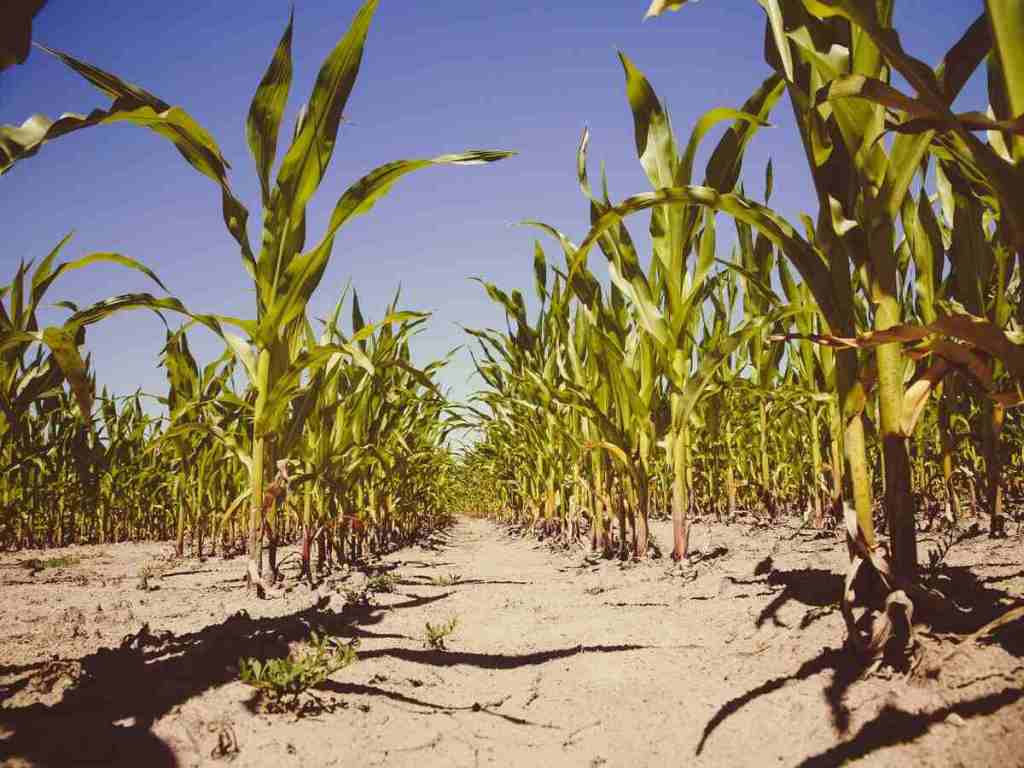
Only 2% of US crop land is used to grow fruits and vegetables. Meanwhile, 60% is used to grow commodity crops that are primarily used for highly processed food, animal feed, and ethanol. In 2017, the United States’ five most-produced crops by metric ton were corn, soy, sugar cane and sugar beets, wheat, and potatoes. Except soy, these are all high-starch foods that can spike blood sugar levels even in their unprocessed forms.
This has two really troubling implications for food access. The first is that we’re not actually producing the kinds of food that we need; if everybody were to meet dietary recommendations for fruits and vegetables, we’d need to nearly double the production of those crops. The second implication is that many of the big industrial farms… aren’t taking good care of the soil, and that will jeopardize our ability to grow food there in the future.
Agriculture and land use (including the clearing of forests to create new crop and cattle fields) already account for about 205 of global greenhouse gas emissions, accelerating the climate crisis. We can’t afford to simply double the land needed to grow healthier food. What we need is a radical change in the food we produce and how that food is used.
So, it’s no wonder that around 60 percent of grocery store purchases are of highly processed foods.6 That kind of food is exactly what our system is designed to produce, distribute, and market. Not because it’s what people should be eating, but because it’s shelf-stable, convenient, and profitable for the consolidated group of companies that own most of the world’s food and beverage products. And, because of processed food’s high salt, sugar, and fat content, it’s hard to resist—especially for kids, whose food habits and preferences are set in motion long before they have an understanding of nutrition or the power to make purchasing decisions for themselves.
Conventional wisdom among healthy community advocates holds that places with low access to healthy foods are linked to America’s rising obesity rate, and that if we could eliminate disparities in food access, we’d solve the problem. It’s an easy conclusion to reach because obesity rates are higher in low-income communities, and those communities are also more likely to have low access to healthy foods. But a number of recent studies indicate that just making healthy food more affordable and available isn’t enough. The term “food desert” itself may have oversimplified the problem, because it implies that low access to healthy food is a naturally occurring phenomenon, and that if only these places were showered with healthy food, they’d thrive.
An alternative term, “food swamp,” highlights the oversupply and affordability of unhealthy foods. This framing suggests that a strategy to increase healthy eating might be to change pricing structures in ways that counteract subsidies for junk food by making unhealthy choices less affordable than healthy ones. Indeed, strategies like soda taxes are working. This success raises new questions: What if the true health, social, and economic costs of industrial agriculture were reflected in products? Would healthier foods become more prevalent and affordable?
Many food system experts have begun to talk about “food apartheid,” because the framing prompts an examination of the underlying food system: who benefits from food production; who has power to make decisions about what to grow; who ends up eating the final products; and whose health is impacted by all of these cumulative decisions. It also opens a conversation about strategies to address underlying inequities by shifting and de-consolidating wealth and power from mega-corporations back to communities.
The main issues with the food system
As the population grows, we need to find a sustainable way to keep everyone fed. Our current arrangement is not it. From its adverse environmental effects to political corruption and everything in between, there are problems with our current food system.
- Rampant Animal Cruelty. Our intensive food system cultivates plants and animals on an industrial scale. As a result, the animals cannot roam and consume their natural feed in most cases. Instead, they eat inappropriate rations while in cramped and unsanitary conditions. Furthermore, they are administered drugs, vitamins, minerals, and antibiotics to speed their growth and mitigate the ill effects of their mistreatment.
- Destruction Of Small Business Agriculture. Most of the agricultural production in our food system is done by a small number of huge companies. These megacorporations have the capital to invest in proprietary, genetically engineered seeds, advanced machinery, and high-tech processing equipment. As a result, small-scale, traditional farms cannot keep up. Moreover, since scale brings efficiency per unit, large operations can afford to sell their products at lower prices, further undermining small businesses.
- Astronomical Resource Consumption. Innovation has led to a per-unit decrease in resource consumption over the past seven decades. However, the absolute resource drain from the food system is staggering. Industrial farming consumes nutrients, fossil fuels, and freshwater more than any other human activity, by far. Moreover, as the human population grows and the food system must satisfy demand, total resource consumption will continue to rise.
- Increasing Environmental Pollution. The byproducts of our food system have a highly destructive effect on the environment. For example, chemical pesticides, herbicides, and animal waste pollute the land and water. Furthermore, erosion and over-farming render land unusable at a high rate. Concurrently, agriculture and food production emit over 70% of human-produced greenhouse gas, causing severe harm to the atmosphere.
- Growing Health Concerns. As the food system pollutes the environment, the environment damages human health. The chemical content in the atmosphere, water, and soil poses serious health risks. Furthermore, people consume the dangerous herbicides and pesticides used on food. Finally, many illnesses are becoming harder to treat because bacteria grow more resistant to the common antibiotics that treat livestock.
- Low-Quality Food. Many of the foods we eat come from monocropped land bereft of nutrients. While the food may provide enough calories for subsistence, it does not provide the essential minerals we need. Moreover, our meat, fish, and poultry are fed cheap and inappropriate foods, and the quality of animal products suffers in turn.
- Demand May Outstrip Supply. The population is growing faster than expected. The U.N. believed that our food production would need to increase by 60% by 2050; however, they have revised their estimate. They think we will have to double food production, yet all the evidence suggests the rate of production increase is tapering off.
- Crops Are Used For Non-Food Purposes. The last three decades have seen an increase in ethanol and biofuel production. Although there are some environmental benefits to using these fuels, people often ignore the external costs. For example, ethanol requires a vast amount of arable land. The pollution and destruction from intensive corn farming far outweigh the benefits of fuel that burns only slightly cleaner. The corn should be used as food or not farmed at all.
- Centralized Control Of The Food Supply. Fewer and fewer companies increasingly control food production, processing, and retail. This consolidation has negative social and economic consequences, especially in countries where labor is easily exploited. Furthermore, large companies often flout government regulations with impunity, participating in corrupt dealings to increase profit.
- Funding For Innovation Is Not Distributed Evenly. More efficient, eco-friendly, and healthy techniques are only available in countries that can afford to fund development. This disparity means less affluent societies are falling further behind. Moreover, industrial farming drives most innovation, and it allocates less money to alternative forms of production. As a result, promising sustainable food production methods like vertical farming, synthetic proteins, and aquaponics are under-researched.
 Things we do for health