Baby cosmetics and personal care range of products are an essential part of the daily needs of all infants nowadays. These products are available in a wide variety to fulfil all the skin care and hygienic requirements of the young ones. However, it should be kept in mind that the chemicals used as additives in these products might be harmful to the immature skin and immunity of an infant. This article presents a review of the possible contaminants and intentionally added additives that are known to cause harm to the human system.
Parental care is an incredibly challenging as well as an essential part of human behavior. Raising a child is the biggest responsibility that requires a lot of effort from both parents. Parenting means promoting and supporting the physical, emotional, social, and intellectual development of a baby from infancy to adulthood. It refers to all the aspects of raising a child, aside from the biological relationship. This explains why the parents want to be prepared for their baby’s needs from his/her arrival only. Moreover, modern parenting has slowly become technology-driven as parents read a lot on the internet before doing anything for their kids, especially during their young childhood. They look for products that are good for the baby’s health and hygiene, as well as are comfortable and easy to use.
Along with the other aspects like feeding and vaccinating, bathing and skin care are also an important part of infant grooming because good hygiene plays a big role in a baby’s health. It has been shown that poor hygiene affects the immune system, general health, and skin quality in infants. It is a known fact that as the infant’s skin is very delicate and soft, there is a high risk of skin breakdown due to allergies, extravasation, infections, and even skin cancers. Therefore, it becomes necessary to preserve its health and integrity. This can be done by choosing the right skin care products. According to a few pediatric publications, babies should be bathed using pH-neutral cleansers. The emollients or the preparations that soften the skin should be free of fragrances, dyes, or preservatives. The nappy area should be kept moisturized and clean.
The popularity of baby products
Keeping all this in mind, the manufacturers of baby cosmetic products try to make mild preparations that can moisturize and nourish the baby’s skin in a better way. This is the reason why this range of products is gaining extreme popularity in the market. The global market is flooded with a wide range of baby cosmetic products like night cream, diaper rash cream, mosquito repellent, massage oil, sunscreen lotion, etc., in response to the high demand for them. However, despite high market demand, the production of these products is not an easy task. The major hurdle in the development of the baby products industry is the high manufacturing cost, limited availability of raw materials, and the stringent rules for the commercialization of these products, leading to a very high price. Due to this, there is a quest in the manufacturing companies to bring the price of these products within the range of all the economic groups of society. However, these efforts should be balanced and should not bring a downfall in the quality and safety of the baby cosmetic products.
Baby cosmetic products are marketed as the best in quality, which makes the consumers purchase them at prices much higher than the normal range of products. The television and print advertisements of these products claim that they have the goodness of milk, cream, and honey. Many new marketing strategies are being introduced in the market, making this newly grown industry flourish very fast. These products have soothing aromas and soft textures. Additionally, manufacturers claim that their products have accurate compositions. They also contain proper foaming and cleansing agents which help in keeping the baby’s skin cool and fresh and maintain skin’s moisture equilibrium. Most of the products also have antimicrobial and antiseptic agents, which prevent skin infection in babies. However, the chemical nature of these products is neutral. A study indicates improved skin health and a decrease in skin diseases with the use of commercial skin care products [8].
Despite so many advantages, it has been reported that many of the baby products contain traces of harmful chemicals which are possibly introduced during the manufacturing, sterilization, or packaging stages. Many additives like preservatives, flavoring agents, coloring agents, and aromatic agents, etc., which are added to these products to increase their shelf life and to enhance their flavor and appearance, are harmful and are known to cause serious health concerns in babies.
Most dangerous chemicals found
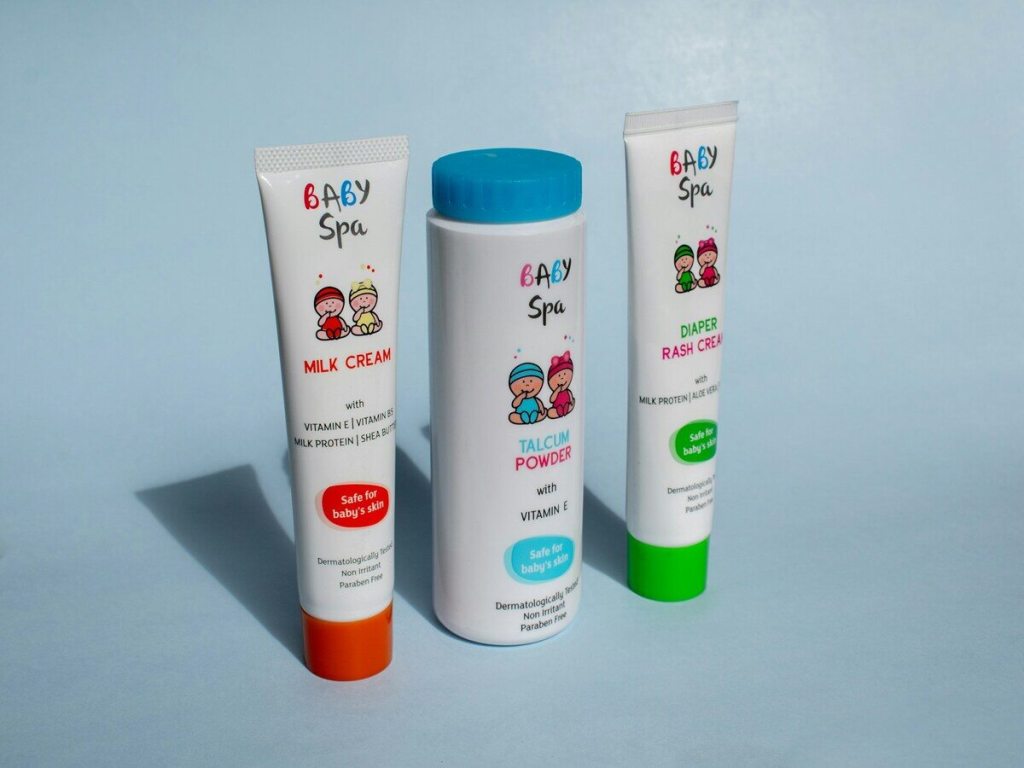
Many baby shampoos, lotions, and other infant care products can contain toxins linked to cancer, birth defects, hormone disruption, learning disabilities, and reproductive harm. And, some of these harmful chemicals don’t even appear on product labels. This is not necessarily due to deliberate omission, but because the chemicals are formed as a byproduct during the manufacturing process rather than added as an ingredient.
It is important to note that companies that manufacture and sell baby care products are largely in compliance with government standards. Until legislation passes to require stronger regulation of the cosmetics industry, the best thing we can do as parents is to reduce our use of manufactured body care products on our children or find products with fewer ingredients. Even labels that say ‘gentle’ or ‘natural’ or ‘pure’ or even ‘organic’ may not be as safe as they should be.
Babies in the womb are particularly vulnerable to endocrine disruptors. This is because their brain and other vital organs are developing. Any disruption to their development in this period can lead to negative health impacts in the future.
The primary concern with harmful chemicals and babies is the impact on their brain development. The brain is only fully developed in our twenties, and hormones play a vital role in this process. But some chemicals, including endocrine disruptors, can disrupt its development by mimicking or blocking certain hormones. For example, the thyroid hormone plays an important role, but can be disrupted by EDCs. A child’s brain only gets one chance to develop, so an early impact can cause problems for the rest of someone’s life.
Exposure to certain harmful chemicals in the womb has been linked to the prevalence in children and adolescents of ADHD, developmental, emotional, and behavioral problems, and autism.
1,4-dioxane
1,4-dioxane is a trace contaminant in some cosmetic products. It is not intentionally added, but forms as a byproduct during the manufacturing process of certain ingredients, including certain detergents, foaming agents, emulsifiers and solvents. Because it is a byproduct, 1,4-dioxane is not listed among the ingredients on product labels.
Some of the biggest names on the market contain trace amounts of this potentially cancer-causing chemical. Strong evidence has been found in animal studies, however, it should be noted that the data in human epidemiological studies are insufficient to determine carcinogenicity in humans, which is why they are classified as “likely to be carcinogenic to humans.”
The FDA periodically monitors the levels of 1,4-dioxane in cosmetic products and has observed that levels have dropped significantly over time due to changes made in manufacturing processes. FDA has not established a safe limit for this chemical in shampoo, lotion, and other toiletries, and maintains that the trace amounts found in those products are not harmful. In an independent risk assessment, the European Commission Scientific Committee on Consumer Safety (SCCS) concluded that 1,4-dioxane is safe at trace levels of ≤10 parts per million. According to the Cosmetic Ingredient Review, an industry-funded, government-backed panel that assesses the safety of ingredients used in cosmetics, “dioxane should not be in any baby care or children’s cosmetics, period, because it is possible to take it out.”
Phthalates
Phthalates are endocrine disruptors that are linked to reproductive malformations in baby boys, reduced fertility, developmental disorders, asthma, and increased allergic reactions. They are commonly found in fragranced cleaning and personal care products, as well as plastics.
The American Academy of Pediatrics found that phthalate exposure is widespread and variable in infants. Infants exposed to baby care products, specifically baby shampoos, baby lotions, and baby powder, showed increased levels of phthalate metabolites in their urine. The study did not determine the level of phthalates in any given product, nor did it establish an association between these findings and any health effects. Subsequent research and statements by the FDA continue to maintain that exposures to phthalates from cosmetics are low compared to levels that are thought to cause adverse effects. Unfortunately, data about health effects on infants and children are limited or missing; and, in general, infants and children are more vulnerable to chemical exposures. In 2008, Congress banned specific levels of certain phthalates (BBP, DEHP, and DBP) in toys, citing studies showing the toxic effects of these substances. The EPA is adding eight phthalates to their “Chemicals of Concern” list, meaning the agency will keep a close watch on the chemicals with more stringent limitations — and even banning — possible in the future.
Formaldehyde
Commonly used as a preservative, formaldehyde is considered a probable carcinogen by the Environmental Protection Agency, yet there are no federal restrictions on the amount present in cosmetics and personal care products. Like 1,4-dioxane, it may exist in a product without being listed, as formaldehyde is produced as a byproduct of the manufacturing process, and can also be created when other chemicals in a product break down over time. In a 2019 independent test conducted in Rajasthan, Johnson & Johnson baby shampoo was found to contain trace amounts of formaldehyde, although the company claims not to use it in its products. When formaldehyde is present at levels exceeding 0.1 ppm, it can cause irritation of the eyes, nose, and lungs. It can also cause skin sensitivity or allergic dermatitis. Even low-level exposure can cause noticeable symptoms, and some people are more sensitive to the contaminant than others. According to the FDA, “the greater the exposure to products that contain formaldehyde in terms of both length of time and concentration, the higher the potential health risks.”
Parabens
Parabens are preservatives commonly used in cosmetics such as moisturizers, shampoos, and conditioners. They extend shelf life by protecting against microbial growth and bacterial contamination. Studies suggest that parabens can disrupt hormones in the body and harm fertility and reproductive organs, affect birth outcomes, and increase the risk of cancer. Because parabens are typically used at levels between 0.01% and 0.3% and have been deemed safe in cosmetics at levels as high as 25%, the FDA’s official stance is that currently there’s no reason for consumers to be worried about using cosmetics that contain parabens. However, there is no specific limit set on the concentration of parabens in cosmetic products sold in the United States.
Other Worrisome Ingredients To Avoid:
- BHA
- Oxybenzone
- Triclosan
- Boric acid
- Sodium borate
- Tolune
- Triethanolamine
- Dyes
- Methylchloroisothiazolinone
- Methylisothiazolinone
- Iodopropynyl butylcarbamate
- Benzyl alcohol
- Isopropyl alcohol
- Oxybenzone
- Plastics with recycling number “3”
Until we have comprehensive safety standards for personal care products, please continue to read labels and remember that the dose makes the poison. It’s not reasonable to eliminate all potentially toxic chemicals from our lives, but at minimum, we can reduce our babies’ exposure by using common sense, being aware, and choosing our products wisely.
What happened to J&J products?
Johnson and Johnson’s baby powder became a staple item in a parent’s toolkit for the prevention of moisture in children’s diapers. For decades, researchers have had the knowledge that talc-containing products may contain asbestos, a known carcinogen, according to the Agency for Toxic Substances and Disease Registry (ATSDR). While talc itself is simply a mineral found in the ground, talc mines are often located near asbestos within the Earth, leading to cross-contamination of both of these minerals. When tested, samples of the talc mineral usually contain the asbestos mineral as well. Scientists have known for years that asbestos is a cancer-causing agent; however, the science regarding the link between talc and asbestos remained intentionally hidden from the public for years.
Talc, by itself, is not considered to pose a great danger to consumers. However, if the talc has asbestos fibers within it (which occurs frequently with talc), consumers may develop a greater risk of contracting specific types of cancer associated with asbestos. According to the National Cancer Institute, asbestos causes mesothelioma, which is a cancer of the membranes that line either the chest or abdomen. Additionally, asbestos exposure may result in lung cancer, larynx cancer, ovarian cancer, peritoneal cancer, or testicular mesothelioma. These types of cancers are very serious and oftentimes fatal.
Even though research for decades has provided a clear link between the fact that asbestos-containing talc may lead to the development of specific types of cancers, talc-containing products were never banned from the shelves in the United States. According to The New York Times, Johnson and Johnson made a statement on May 12, 2020, that they would discontinue all of their talc-containing products permanently throughout both the United States and Canada. While you shouldn’t use Johnson and Johnson baby products, once the last Johnson and Johnson baby powder has officially sold from the shelves, you will not have the opportunity in the future to do so.
Two chemicals considered harmful to babies remain in Johnson & Johnson’s baby shampoo sold in the U.S. and some other countries, even though the company already makes versions without them, according to an international coalition of health and environmental groups.
Now the coalition is urging consumers to boycott Johnson & Johnson baby products until the company agrees to remove the chemicals from its baby products sold around the world, including in China and the U.K.
In response, Johnson & Johnson said in a statement that formaldehyde-releasing preservatives are safe and approved by regulators in the U.S. and other countries, but that it is gradually phasing them out of its baby products. It said it is also reformulating baby products to reduce the level of dioxane below detectable levels. But it did not say whether it would respond to or meet the campaign’s full demands.
 Things we do for health