Greenwashing is the process of conveying a false impression or misleading information about how a company’s products are environmentally sound. Greenwashing involves making an unsubstantiated claim to deceive consumers into believing that a company’s products are environmentally friendly or have a greater positive environmental impact than they actually do.
In addition, greenwashing may occur when a company attempts to emphasize sustainable aspects of a product to overshadow the company’s involvement in environmentally damaging practices. Performed through the use of environmental imagery, misleading labels, and hiding tradeoffs, greenwashing is a play on the term “whitewashing,” which means using false information to intentionally hide wrongdoing, error, or an unpleasant situation in an attempt to make it seem less bad than it is.
Also known as “green sheen,” greenwashing is an attempt to capitalize on the growing demand for environmentally sound products, whether that means they are more natural, healthier, free of chemicals, recyclable, or less wasteful of natural resources.
The term originated in the 1960s, when the hotel industry devised one of the most blatant examples of greenwashing. They placed notices in hotel rooms asking guests to reuse their towels to save the environment. The hotels enjoyed the benefit of lower laundry costs.
More recently, some of the world’s biggest carbon emitters, such as conventional energy companies, have attempted to rebrand themselves as champions of the environment. Products are greenwashed through a process of renaming, rebranding, or repackaging them. Greenwashed products might convey the idea that they’re more natural, wholesome, or free of chemicals than competing brands.
One common form of greenwashing is to include misleading labeling or bury environmentally unsound practices in the fine print. This can include use of terminology such as “eco-friendly” or “sustainable,” which are vague and not verifiable. Imagery of nature or wildlife can also connote environmental friendliness, even when the product is not green. Companies may also cherry-pick data from research to highlight green practices while obscuring others that are harmful. Such information can even come from biased research that the company funds or carries out itself.
Is the food industry green-washing?
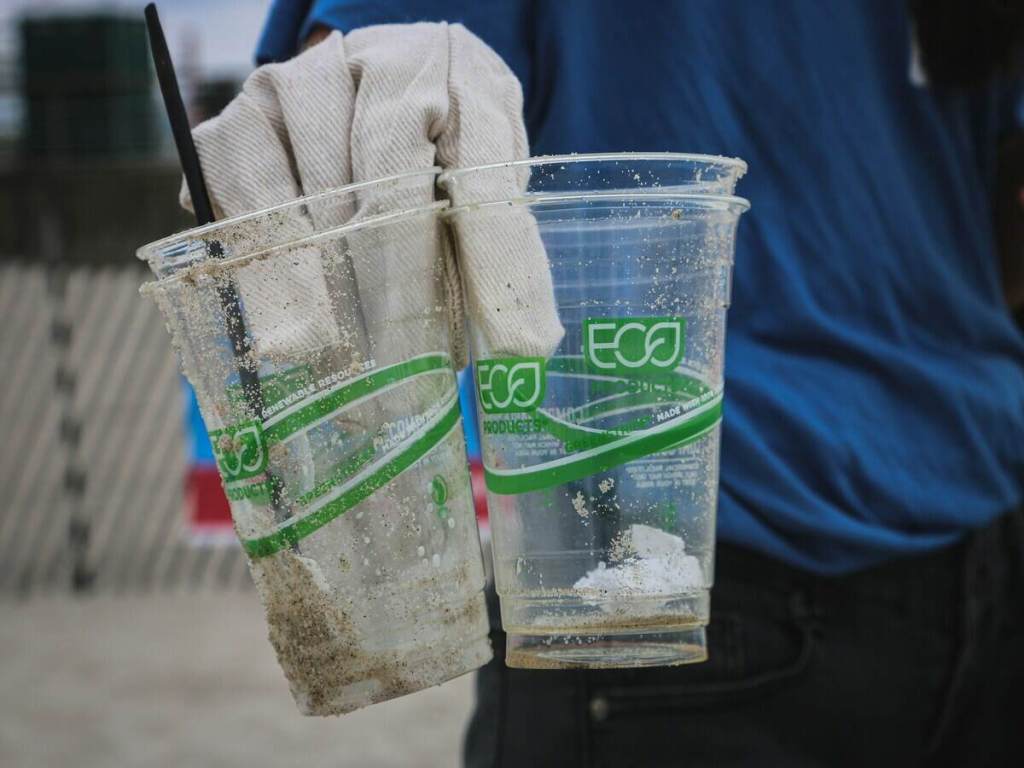
Due to the growing demand for eco-friendly labeling, many businesses do not want to miss out on this market trend, and they have started promoting that their business adheres to eco-friendly principles and that their goods are sustainable. Additionally, stakeholders such as investors, consumers, governments, and corporate customers have also increased pressure on corporations during the previous decade to provide details on their environmental performance and green products. However, as time passed, it was discovered that many companies had not been transparent to the public, particularly to consumers, and had been engaged in greenwashing practices. Many companies claim that their products and services support the concept of sustainability to increase consumer trust, but in reality, only a few do, and some do not even implement environmental protection.
Greenwashing, often referred to as eco-washing, eco-bleaching, greenwashing, or green image washing, is the practice of companies or organizations using deceptive advertising to boost the perceived overall advantages of their products. Greenwashing in the food industry occurs when companies market their products as sustainable despite not meeting genuine sustainability standards. This deceptive practice aims to mislead consumers into believing they are purchasing environmentally friendly products, enabling companies to charge premium prices and gain access to the growing market for sustainable goods. An example of greenwashing occurs when a retail company places sustainable labels on its products while featuring the company’s name on the label to imply that the entire company is sustainable; thus, it can confuse consumers, leading them to believe that the company’s overall practices are environmentally friendly, even if they are not. Such misleading marketing tactics decrease consumer trust and give these companies an unfair advantage in the market, as they benefit from appearing more sustainable than they actually are. This also causes consumers to wonder if the things they purchase are sustainable and whether they are correct for supporting global environmental preservation under the notion of sustainability. Due to the increasing number of issues that have arisen with the use of green or eco-friendly labels, consumers nowadays are beginning to display concerns and even started to reduce their intention to buy.
One of the biggest culprits of greenwashing is the food industry, and it’s no surprise why. In less than a decade, veganism has soared in popularity, increasing by up to 500%. Anxiety surrounding the climate crisis, fueled by cruel practices in the meat and dairy industries, is felt by 75% of young people. Pair those stats with the growing desire to live healthier lifestyles, and we’ve got ourselves a recipe for disaster for traditional food brands.
The food system is responsible for a third of global greenhouse gas emissions each year, with meat and dairy products being major contributors. It’s no wonder that many consumers are seeking ways to reduce their environmental impact by choosing products that claim to be sustainable or eco-friendly. But how can we be sure that these claims are legitimate?
The Changing Markets report identified 53 examples of misleading green claims on food products and in marketing materials over the past year. Many of these claims are related to climate impact, with products being described as “carbon neutral” or “climate positive” without any scientific evidence to back up the claims. The report recommends banning “outright generic climate claims” and claims based on carbon offsetting programs.
How does it actually happen?
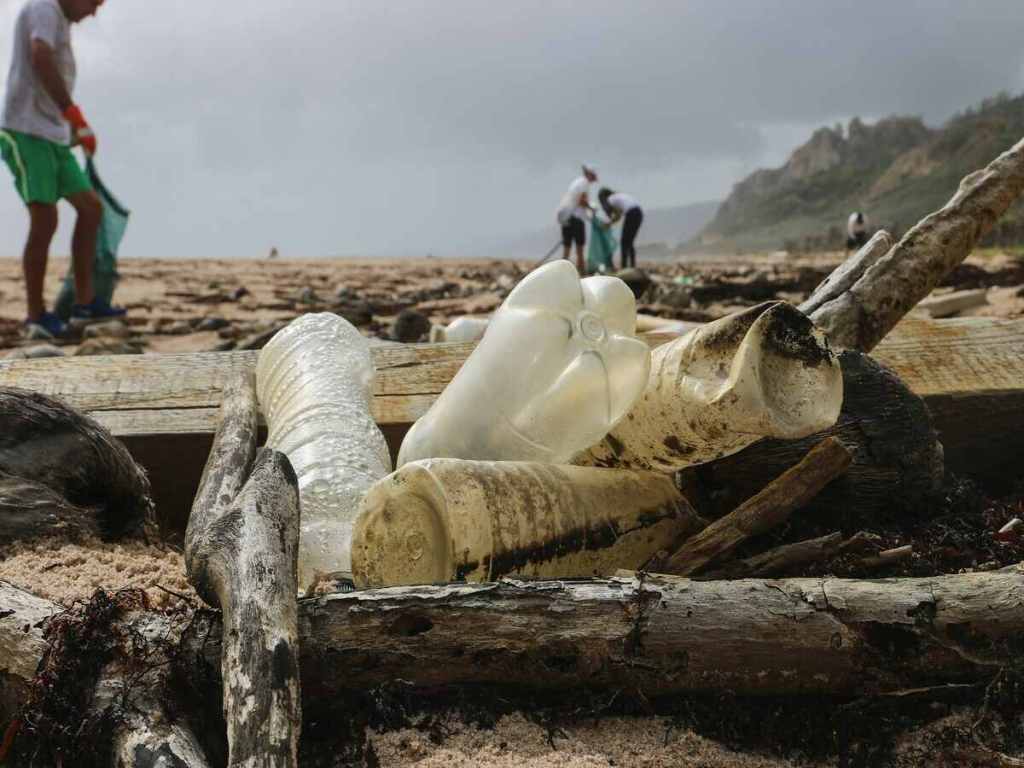
Every company strives to maximize profits and take advantage of market trends. As a result of the climate devastation we are now witnessing globally, social sustainability has grown incredibly important. At its core, greenhouse gas emissions (GHGs) are the greatest cause of change. Thus, many firms are purportedly using ‘green energy’, renewable energy, and other sustainable technologies to reduce the environmental harm that their businesses are causing in order to address anthropogenic climate change.
To capitalize on consumer expectations for environmentally sustainable goods, brands, or services, many food firms are emphasizing their ‘green’ or sustainable practices. Popular brands are promoting themselves as socially sustainable in an effort to cash in on these consumer needs, yet many of these firms are misleading consumers with such claims.
For instance, Starbucks recently released a “straw-less lid” that gave customers an open-faced plastic cap in place of the cup’s customary straw-equipped takeout version. The American coffee chain made this effort as part of its sustainability program to use recyclable materials for its drinks, rather than packaging plastic trash that would otherwise end up in landfills. Yet, compared to the prior straws and lightweight lids, the new lids include more plastic.
The manufacturer acknowledged that Nitro lids are substantially thicker than existing lids and composed of polypropylene, a widely-accepted recyclable plastic that can be collected by recycling infrastructure. Nevertheless, given that only 9% of the plastic produced worldwide is recycled means that the introduction of lids without straws would have little impact on recycling rates and instead increase waste disposal issues. Large companies like Starbucks appear to have used innovative greenwashing techniques to attract both new and existing customers under the guise of sustainability.
Food corporations make inflated claims without supportive evidence. For example, the well-known beverage company Innocent misrepresented the impact it has on the environment in a commercial. After receiving a complaint from the environmental organization Plastics Rebellion, which claimed that the commercial misrepresented the environmental benefits of the products and was therefore deceptive, the advertisement was banned. Innocent claimed that its advertisement was intended to convey a message about recycling in order to disprove claims that it was misleading.
Another telltale greenwashing sign is when goods and services are labeled “Eco-friendly,” “Sustainable,” “Recyclable,” or “Green”, without any evidence. For example, Coca-Cola’s “World Without Waste” marketing campaign serves as an illustration of greenwashing since it leads people to believe that the company operates in a sustainable manner even when this is untrue. In reality, the corporation is the greatest plastic pollutor in the world for the fourth consecutive year, according to the annual report of the international coalition Break Free From Plastic, for 2021.
In response to criticism over its use of plastic, the firm promised that by 2030, 25% of its packaging will be reusable globally. However, according to Globaldata, Coca- Cola’s total GHG emissions in 2021 were 5.17 million tonnes CO2 equivalents, up 8% from 2020. This demonstrates the company’s careless handling of its sustainability commitments and how it greenwashes its consumers.
How to recognize green-washing in the food industry?

As consumers become savvier to calling out examples of greenwashing from brands, it seems that no industry is immune. One of the most prominent is food and beverages. While many food and beverage brands are making strides with measures targeting packaging and plastic waste, overstating the environmental benefit of these measures can quickly lead to accusations of greenwashing. With commercial groups and regulators honing in on potentially misleading claims, greenwashing brands face increasingly severe repercussions. It’s more important than ever to understand the commercial and legal implications of conveying your sustainability credentials truthfully and effectively.
- Greenwashing attempts to exploit the growing consumer demand for environmentally responsible products.
- It creates a false impression that a company or its products are environmentally conscious or friendly, which can mislead consumers.
- Some companies have been accused of greenwashing to capitalize on the environmental, social, and governance (ESG) investing movement.
- Genuinely green products or businesses back up their claims with verifiable facts and detailed information.
Understanding greenwashing is crucial for consumers who want to make informed decisions and support sustainable practices. While some companies genuinely strive for sustainability, others use greenwashing to attract eco-conscious consumers without making real environmental improvements. Recognizing greenwashing holds companies accountable and ensures that genuine sustainability is achieved.
Greenwashing can take various forms, each designed to mislead consumers about the environmental benefits of a product or service. Here are some common examples:
- Misleading labels. Products often feature labels such as “all-natural,” “eco-friendly,” or “green” without any substantial evidence or certification to back these claims. For example, a plastic bottle may be labeled “eco-friendly” because it is recyclable, even though its production involves harmful chemicals.
- Hidden trade-offs. Companies might highlight a single positive environmental aspect of a product while concealing other significant adverse impacts. For instance, a company may advertise that its paper products come from sustainably harvested forests but must disclose that the manufacturing process is highly polluting.
- Vague claims. Another common tactic is using broad, ambiguous terms like “green” or “sustainable” without providing clear definitions or supporting evidence. For example, a product might be advertised as “green” simply because it uses less packaging without any additional information about the overall environmental impact.
- Environmental imagery and branding. Brands frequently use imagery associated with nature, such as trees, leaves, and green colors, to create a perception of environmental friendliness. This visual strategy can effectively mislead consumers into believing that a product is more environmentally friendly than it truly is.
- Irrelevant claims. Sometimes, companies make truthful claims that are irrelevant or insignificant in the context of the product’s overall environmental impact. For example, a cleaning product might claim to be “CFC-free,” even though CFCs have been banned for decades and are irrelevant to the product.
- Lack of sustainability initiatives. Some companies may boast about minor environmental initiatives with little to no impact, using them as a marketing ploy to appear eco-conscious. For example, a large corporation might promote a small-scale tree-planting campaign while continuing to engage in large-scale deforestation activities elsewhere.
- Selective disclosure. Another form of greenwashing involves selectively disclosing only the positive aspects of a product or company’s environmental impact while omitting negative information. For instance, a company might highlight its use of renewable energy in one facility while ignoring its reliance on fossil fuels in other operations.
- False certifications and endorsements. Some companies may use fake certifications or endorsements, often through labels made ‘in-house’, to give the impression of third-party validation of their environmental claims. These deceptive endorsements can be compelling to consumers who rely on such certifications to ensure a product’s sustainability.
- Overstating benefits. Exaggerating a product’s environmental benefits is another common greenwashing tactic. For instance, a car manufacturer might claim that its vehicles are “eco-friendly” because they achieve slightly better fuel efficiency, although they still contribute significantly to carbon emissions.

Identifying greenwashing is crucial for making informed, sustainable choices. Here are key strategies to help you spot greenwashing,
- Look for proof. A legitimate green claim should be backed by verifiable evidence. Companies should provide clear, accessible information about their environmental practices, such as third-party certifications, detailed reports, and transparent supply chain data. Be wary of claims that lack concrete proof or seem vague and unsupported.
- Beware of vague language. Terms like “eco-friendly,” “natural,” or “green” are often used without clear definitions. These terms can be misleading if not backed by specific details about how the product or company meets these claims. For example, just because a product is labeled as “natural” does not necessarily mean it is environmentally friendly or safe.
- Check for hidden trade-offs. Some companies highlight a single positive attribute of a product while ignoring other significant adverse impacts. For instance, a product might be marketed as being made from recycled materials, but the manufacturing process could still be highly polluting. Consider a product’s total environmental impact, including its production, use, and disposal.
- Assess consistency in sustainability efforts. A company genuinely committed to sustainability will have consistent practices across its operations. Inconsistencies can be a red flag, like a company promoting “net-zero” products or services solely by purchasing carbon credits. Consistent and transparent communication about sustainability efforts is a hallmark of genuine environmental responsibility.
- Scrutinize marketing and imagery. Greenwashing often involves the use of misleading imagery and branding. Pictures of nature, green colors, and eco-friendly visuals can create an illusion of sustainability. However, these visuals do not necessarily reflect the company’s actual practices.
- Verify the company’s overall commitment. Research the company’s overall environmental track record. A company genuinely committed to sustainability will have a comprehensive environmental policy, set measurable goals, and regularly report on its progress. Look for detailed sustainability reports that cover all aspects of their ecological impact.
 Things we do for health