Over the past 20 years, the diet parents and schools are serving kids has deteriorated to the point the majority of kids’ energy is coming from ultra-processed foods. As a result, almost 14 million children – that’s roughly 25% of every American child between the ages of 2 and 17 – are considered obese. Another 8.6 million kids are eating their way into that category.
For starters, kids are fatter because their parents are fatter (roughly 40% of adults are obese). But what’s especially dangerous for kids is that while their parents may at least have enjoyed healthier, more active childhoods, the same cannot be said for today’s children.
Kids today are more sedentary and eat worse diets than did mom and dad at the same age. With each passing year, fewer kids are engaging in athletics or any other kind of physical activity (and those that do are quitting earlier). Equally important, their diet is horrendous.
A study of more than 30,000 kids by nutritional experts at Tufts University found that two-thirds of the typical American child’s diet comes from ultra-processed foods. That ‘ultra’ means even more of the intrinsic healthiness of the food has been removed. Why? Because such foods are convenient for manufacturers and parents alike. They last longer and are designed to taste good.
Ultra-processed foods including sweetened breakfast cereals, pizzas, donuts, flavored potato chips, boxed mac-and-cheese, and so on. Unprocessed foods, on the other hand (fruits, vegetables, home-cooked meals, etc.) now constitute just 23.5% of children’s total energy intake. Interestingly, the Tufts’ study found no discrepancy in the diets of kids hailing from educated, high-income homes – they’re eating just as poorly as everyone else. The lack of disparities based on parental education and family income indicates that ultra-processed foods are pervasive in children’s diets.
A new study reported by NPR has shown that kids have been consuming an increasingly high amount of ultra-processed junk food. These foods are high in calories but are lacking in nutrition. They also have high amounts of unhealthy synthesized ingredients, which aren’t meant to be consumed in mass quantities. Ultra-processed foods encourage overeating and weight gain, which can lead to higher risks of problems such as heart disease.
According to a peer-reviewed study by the Journal of the American Medical Association (JAMA), 67% of children’s daily calories come from ultra-processed foods. Examples of ultra-processed foods include microwavable pizzas and hamburgers. These ready-to-heat and ready-to-eat meals increased from 2.2% of calories in 1999 to 11.2% reported in the JAMA research article from 2018. The appeal and accessibility of these foods have increased the number of calories they took up by over 5 times.
How much food children actually need?

Children tend to require higher amounts of calories for their body size as they are still growing. According to a calorie calculator from the American Cancer Society, a lightly active 5-foot 10-inches, 130-pound 15-year-old male would need 2658 calories a day to maintain weight. A 25-year-old with the same traits would need 2560 calories.
The foods that supply these calories should be healthy to provide the nutrients needed for growth. A Calorie with a capital C, which is the type found on food labels, is the amount of energy it takes to raise 1 kg of water by 1 degree Celsius. The Calories in ultra-processed foods are mostly empty calories, which means that most of the energy comes from fats and sugars. They provide energy but do not contain the nutrients needed for your body to function, such as vitamins. Empty calories are also digested quickly, which leads to hunger and overeating.
Some foods that contain empty calories are soft drinks, sports drinks, energy drinks, fast food, candies, cakes, and donuts. All the foods on this list can be identified as ultra-processed. The JAMA study clearly documents the increase of ultra-processed food consumption in youth, which is clearly a problem given the rising obesity rate in the United States.
More than one in three American kids will eat fast food today, a new government report says. The same will be true tomorrow, and the next day, and the day after that. On any given day, 34.3% of U.S. children and teens between the ages of 2 and 19 eats pizza, fried chicken, tacos or some other dish prepared in a fast-food restaurant, according to data collected by the Centers for Disease Control and Prevention.
More specifically, 12.1% of these young diners will get more than 40 percent of their daily calories in the form of fast food. An additional 10.7% will trace 25% to 40% of their daily calories to a fast-food joint, and 11.6% will get fewer than 25% of their calories from one of these dining establishments.
Junk food is everywhere. It’s the new food fashion. It’s not only at fast-food drive-troughs, but prevalent in all restaurants and supermarkets, and in schools, hospitals, and health-food stores. It’s cheap, quick, easy — and addictive. Most people are deceived about it, mistakenly thinking it’s not so bad in moderation. This idea comes from deceptive marketing, dressing up junk food to appear more natural, especially when certified organic, and often fortified with synthetic vitamins. It’s directed at children and adults — promotions and packaging that makes the products hard to resist.
The billions of dollars spent on marketing junk food is an investment easily returned in the form of greater sales volumes, higher profit margins, and addicted children who become addicted adults. (A very similar strategy has long been used by tobacco companies: sugar is the new tobacco, only much cheaper and more available to kids.)
What would healthy meals for children look like?

Nutrition for kids is based on the same ideas as nutrition for adults. Everyone needs the same types of things, such as vitamins, minerals, carbohydrates, protein and fat. These are called nutrients. Children need different amounts of specific nutrients at different ages. The best eating pattern for a child’s growth and development considers the child’s age, activity level and other characteristics.
Food packed with nutrients — with no or limited sugar, saturated fat, or salt added to it — is considered nutrient dense. Focusing on nutrient-dense foods helps kids get the nutrients they need while limiting overall calories.
Consider these nutrient-dense foods:
- Protein. Choose seafood, lean meat and poultry, eggs, beans, peas, soy products, and unsalted nuts and seeds.
- Fruits. Encourage your child to eat a variety of fresh, canned, frozen or dried fruits. Look for canned fruit that says it’s light or packed in its own juice. This means it’s low in added sugar. Keep in mind that 1/4 cup of dried fruit counts as one serving of fruit.
- Vegetables. Serve a variety of fresh, canned, frozen or dried vegetables. Choose peas or beans, along with colorful vegetables each week. When selecting canned or frozen vegetables, look for ones that are lower in sodium.
- Grains. Choose whole grains, such as whole-wheat bread or pasta, oatmeal, popcorn, quinoa, or brown or wild rice.
- Dairy. Encourage your child to eat and drink fat-free or low-fat dairy products, such as milk, yogurt and cheese. Fortified soy beverages also count as dairy.
During their growing years, foods that supply protein, calcium, iron and vitamins are critical to their growth and development. Without them, children may be stunted and, in serious cases, it can impact the development of their mental and motor skills. These nutrients are present in the major food groups – grains, fruits, vegetables, dairy and protein foods.
There’s a plethora to choose from, but here are dietitians’ 10 top picks:
- Wholegrain foods such as wholemeal bread, brown rice and oats are more nutritious than refined grains (e.g. white rice) because they contain more vitamins, minerals, phytochemicals and fiber. Fiber in these foods maintains digestive health and prevents constipation.
- Fruit and vegetables are bursting with vitamins, minerals, phytochemicals (beneficial plant substances) and fiber.
- Fish. Packed with protein, fish helps build healthy muscles and bones. Oily fish like salmon, tuna and sardines also contain high amounts of omega-3 fatty acids, which support eye, brain and nerve development.
- Meat. It is a great source of protein and iron. Iron optimizes brain development and function, and supports the immune system.
- Eggs. High in protein and vitamins, eggs are one of the richest sources of choline – an essential nutrient that aids brain development.
- Milk. It is a good source of calcium and phosphorous, which are important for building bones and muscles. Top calcium sources include dairy products but other good sources also include fortified food (e.g. soybean milk), dark green leafy vegetables and fish with edible bones (e.g. sardines). You can serve full-fat milk, not low-fat or skimmed varieties, if your child is not yet two years old, unless your child is overweight.
- Cheese. Filled with protein, calcium, phosphorous and vitamin D, cheese is great for healthy bone growth.
- Berries. Strawberries and blueberries are rich in vitamin C, antioxidants and phytochemicals. They protect healthy cells from damage, boosting the immune system.
- Broccoli. It is packed with nutrients that optimize eye development and ward off cell damage. It also provides lots of fiber that boosts digestion and prevents constipation.
- Peanut butter. Rich in monounsaturated fats, peanut butter provides children with energy and protein. However, some brands contain added salt, sugar, palm oil and partially hydrogenated fats, which reduce nutritional quality.
Which foods are harmful to children?
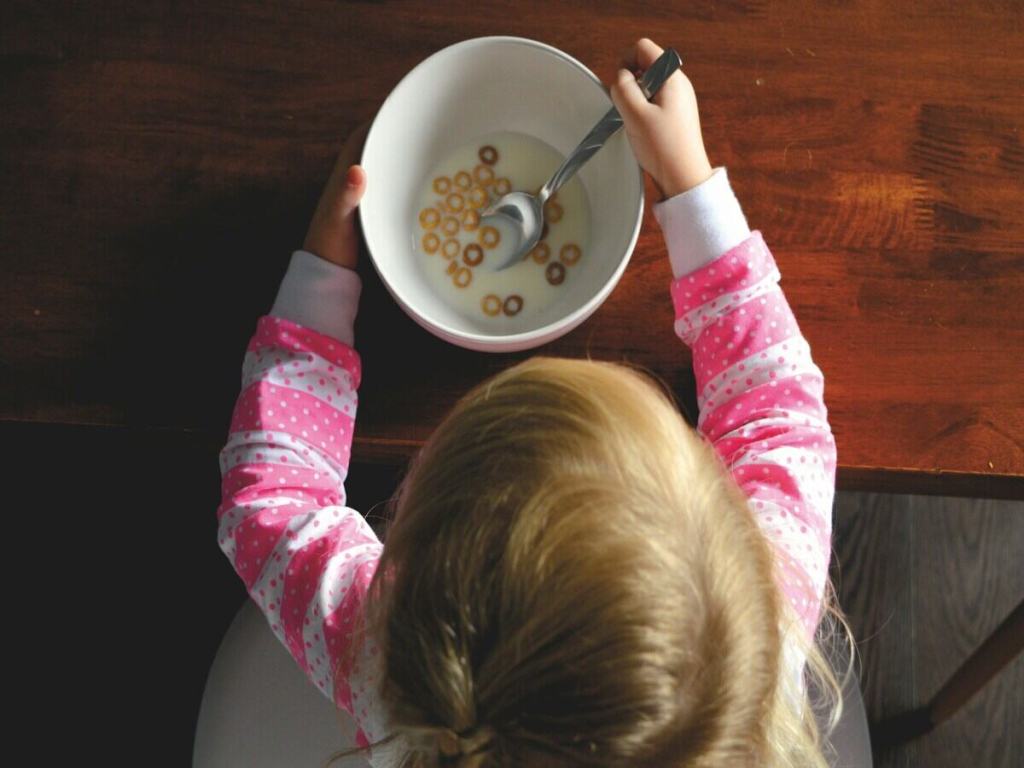
Although not the only influence on the development of the eating habits of their children, parents are by far the biggest influence, especially early on in life. Being impressionable, children eat what they see others eat. If they are repeatedly exposed to certain foods for a good part of their childhood, chances are the same foods will form the foundation of their diet in adulthood. For this reason, it is critical that parents make healthy food choices, if not for themselves, then for the future health of their kids. After all, children’s nutrition is of utmost importance.
Macaroni and Cheese
The ever-popular staple of kids, teens and cash-strapped college students, mac and cheese is unfortunately one of those unhealthy foods you shouldn’t feed to your children.
- Being highly processed, it has preservatives, food coloring, etc.
- It contains a significant amount of sodium—too high, in fact. Even if you consume half of the contents of the package in one sitting, you will take in almost half the daily recommended sodium value.
- Mac and cheese has little nutritional value with the exception of a small amount of protein, riboflavin, thiamine and folate.
- It is highly caloric. A package contains just under 1000 calories, when prepared.
- Some mac and cheese variations contain a cheese mix, which isn’t real cheese.
- Fiber–fundamental to proper and healthy digestion–is virtually nonexistent.
- Sugar content: about 28 grams in a package.
- To top it all off, macaroni and cheese is a refined carbohydrate, one of those unhealthy foods that are over-consumed in today’s world and contribute to weight gain.
Fruit Snacks
Speaking of unhealthy foods for kids, we turn our attention to fruit snacks. Strike fruit snacks, fruit rolls, and fruit-like candy from your grocery list once and for all. These children’s snacks are small bundles of junk sold under the banner of the word ‘fruit’ which, to some parents, equates to ‘healthy’.
Unfortunately, fruit snacks, and I’m using this term very loosely, find a spot near the top of the unhealthy foods for kids list. Reason being, most of these fruit snacks brim with sugar, corn syrup and all sorts of additives and artificial flavors.
It’s also important not to get fooled by the claims of added Vitamin C either. The added Vitamin C is a gimmick designed to persuade you to buy the product because it appeals to your concern for the kids’ health. The truth is the health hazards far outweigh any of the benefits.
Cheese Strings
Cheese Strings are one of the children’s all-time favorite go-to snacks. The main problem with the cheese string is that often it isn’t made of real cheese. Instead, it’s made from a cheese product or processed cheese.
Even if you manage to find cheese strings made with real cheese, it is likely that these contain emulsifiers, food coloring, perhaps dairy substitutes, sometimes even sugar. Your kids should not be consuming these ingredients on a daily basis. Besides calcium and a little protein, there is not much to speak of in terms of nutritional value. Both, calcium and protein can be easily obtained via other common calcium-rich food sources.
Energy and Sports Drinks
Sports drinks, and energy drinks in particular, are one of those unhealthy foods (drinks) for kids that you should avoid feeding to your children. Peddled by commercial ads and/or the sports industry as the quick energy fix for athletes, energy and sports drinks are enormously over-hyped and overused.
And just because you’re a young hockey, soccer or football player, it doesn’t mean you have to chug sugar-laden sports drinks after every practice or game just because you see your favorite athlete do so on TV.
Loaded with spoonfuls of sugar and virtually no nutritional value, sports and energy drinks are one of the most unhealthy foods for kids. Well, drinks. Avoid them, just like soda. Unless your children run for hours on end in oppressive sun, heat and/or humidity, losing the much-needed electrolytes by the bucketful and facing severe dehydration, don’t feed them sports drinks.
Granola Bars
For many people the word granola evokes images of a young, fit and healthy adult reaching the peak of a rugged mountain and then, with a big smile, biting into a granola bar. Health and fitness personified.
It’s because of images like this that we perceive granola bars as a healthy snack full of nutrients that will help our children grow into healthy adults. And for this reason we freely pack these convenient snacks in our children’s school lunch bags. This, unfortunately, is the wrong move.
Reason being, most granola bars on the market contain a number of unhealthy ingredients, not the least of which is sugar. Often, granola bars hold large amounts of sugar, sometimes as high as in the average chocolate bar.
After consuming these sugar, er granola, bars, all your children are going to experience is a sugar high followed by a swift crash. This is especially detrimental at school where focus and energy are required throughout the day. All this excess sugar makes granola bars one of those unhealthy foods for kids that you should avoid buying. Although healthier granola bar options exist, read the nutrition label carefully. If you’re unsure, it’s best to give them a pass.
Cereal and sugar
Sugar is everywhere. We ingest sugar in our morning coffee, in sodas and juices, in our desserts, in salad dressings, in condiments, in processed foods and in cereal. The cumulative effects of this over-consumption can be devastating over time.
Although some healthy, low-sugar cereals exist, they are few and far between. Most contain too much sugar. If you find sugar near the top of the list of ingredients, it’s found in large amounts. To add fuel to the fire, many cereals, especially the ones for children, are made from refined grains.
Refined grains cereals are starchy, low in fiber, contain additives, coloring and flavoring, and are generally devoid of many nutrients. Undoubtedly, this unhealthy alliance of sugar and refined grains makes cereal one of the most unhealthy foods for kids that steadily contributes to the obesity epidemic and poor digestion.
Adults have an undeniably massive influence on our children in many ways, including the responsibility of instilling healthy eating habits. As a result, we must be aware of the food choices we make because they not only affect our own health, but the health of our children.
And, since children need our guidance in selecting which foods to buy and eat, in order to grow up healthy, we have to be strong and resist the temptation of purchasing unhealthy, convenient foods as much as possible.
 Things we do for health