Sugar-sweetened beverages (SSBs) or sugary drinks are leading sources of added sugars in the American diet. Frequently drinking sugar-sweetened beverages is associated with weight gain, obesity, type 2 diabetes, heart disease, kidney diseases, non-alcoholic liver disease, tooth decay and cavities, and gout, a type of arthritis. Limiting sugary drink intake can help individuals maintain a healthy weight and have healthy dietary patterns.
Nationally, 63% of adults aged 18 or older reported drinking sugar-sweetened beverages once daily or more. Sugary drinks include regular soda, sweetened fruit drinks, sports/energy drinks, and sweetened coffee/tea drinks.
Sugar-sweetened beverages are any liquids that are sweetened with various forms of added sugars like brown sugar, corn sweetener, corn syrup, dextrose, fructose, glucose, high-fructose corn syrup, honey, lactose, malt syrup, maltose, molasses, raw sugar, and sucrose.
Examples of SSBs include, but are not limited to, regular soda (not sugar-free), fruit drinks, sports drinks, energy drinks, sweetened waters, and coffee and tea beverages with added sugars. In 2011-2014, 6 in 10 youth (63%) and 5 in 10 adults (49%) drank a sugar-sweetened beverage on a given day. On average, US youth consumed 143 calories from SSBs and US adults consumed 145 calories from SSBs on a given day.
In 2001, Americans spent over $60 billion on carbonated soft drinks. During the same year, the average American consumed approximately 53 gallons of soft drinks. Sales of carbonated soft drinks have grown by 2-3 percent annually. The U.S. market includes nearly 450 different soft drinks. One of every four beverages consumed in America today is a soft drink. The average child drinks over 500 cans of soda a year.
How it all started
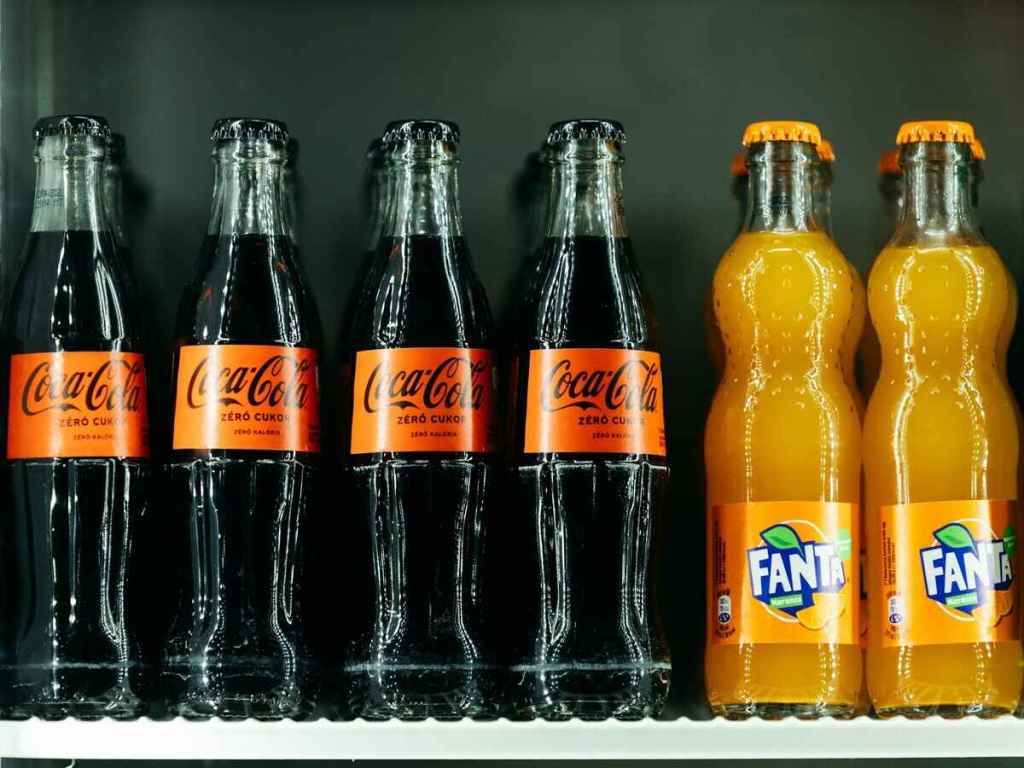
Sodas and other carbonated soft fizzy drinks usually contain carbonated water (water with dissolved carbon dioxide), some kind of sweetener, and natural or artificial flavoring. Carbonated water contains more carbon dioxide than flat water, enabling us to enjoy a bubbly sensation, without consuming sugar like we would when drinking sodas.
Carbon dioxide has no color and is flavorless. On its own, it’s nothing much to write home about. On the other hand, the carbonic acid created during the carbonation process is what creates the fun fizz you love – and that tingly sensation. The colder the beverage and the tighter it’s sealed, the fizzier your drink will be. The most carbon dioxide that water can handle is approximately 8 grams per liter. So, when there is excess carbon dioxide, it will stay in the water until the pressure is released, the carbon dioxide escapes, and the beverage goes flat.
Carbonation can also occur naturally. This is true of naturally carbonated mineral water that absorbs the carbon dioxide from the ground. Carbonation can also be man-made, created during a process in which the carbon dioxide is pumped into the beverage at a high-pressure level. The container is then sealed to keep the carbonation inside.
The carbonation process was first invented by a man named Joseph Priestley in England in 1767. The process, however, wasn’t commercialized until 1786 in Switzerland by a man named Jacob Schweppes.
Carbonated beverages were first bottled for sale back in 1835, and this is also when people began adding flavoring to their carbonated drinks. Once this happened, flavored carbonated beverages became a mainstay in Western culture and the drink of choice of many consumers.
Originally, carbonated beverages were only stored in bottles, because keeping the carbon dioxide inside of cans without it trying to bust through the can’s seams proved to be a challenge. Today, you can find carbonated beverages in bottles and cans, with more and more people jumping on the carbonation craze while attempting to kick their sugary soda habit.
Coke got its start in the early 1800s when a pharmacist by the name of Dr. John S. Pemberton created its original flavored syrup. Once the syrup was made, he took it to a local pharmacy and mixed it with carbonated water. That exact moment was the creation of what would become one of the world’s most beloved soft drinks.
Back then, Coke was the first to expand internationally. In 1915 they went on to open a manufacturing plant in the Philippines. Later, in the 1920s, they began expanding their marketing reach into Europe. Australia and South Africa followed behind in the ‘30s. Additionally, the famous red and white Coca Cola logo was created in the late 1940s.
Pepsi was also created in a pharmacy. This time by a man named Caleb Davis Bradham. He owned a pharmacy in New Bern, North Carolina which would later become the birthplace of Pepsi-Cola. At the time, Coke had already been on the market for 12 years. After seeing the positive response from his Pepsi creation, Bradham dropped everything and solely focused on building his new company.
The company went on to sell 7,968 gallons of Pepsi syrup in its first year of existence. Within two years, Pepsi sold another 19,848 gallons of syrup. By this point, Pepsi was seen as a fierce competitor within the beverage industry. Sadly, this upward trend didn’t last long. The Great Depression caused Pepsi to file for bankruptcy twice, once in 1923 and again in 1931, due to sugar shortages.
Eventually, the company got back on its feet thanks to major business changes such as a new headquarters and company president. To proactively avoid another bankruptcy, Pepsi purchased a sugar plantation in Cuba in case of another sugar shortage. During this time, they also put out a new red, white, and blue logo meant to evoke feelings of patriotism and show support toward American troops.
What is the main problem with soft drinks?
According to the CDC, drinking soda frequently is associated with weight gain, obesity, type 2 diabetes, heart disease, kidney disease, non-alcoholic liver disease, tooth decay, cavities, and gout. Additionally, adults and adolescents who drink soda frequently are more likely to have less healthy behaviors, including smoking, not getting enough sleep, and more screen time.
Drinking soda is associated with tooth decay (dental caries), enamel erosion, and tooth loss, per a 2022 study in the journal Biomimetics. Anything acidic and anything with a lot of sugar can cause tooth “rot,” or decay, Soda is quite acidic and usually has high amounts of sugar, which gets turned into lactic acid by plaque and microbes in the mouth and starts to dissolve the teeth.
While soda may not directly cause damage to the stomach’s lining, soda is highly carbonated, which can irritate people who already have digestive issues. For those with gastritis, ulcers, acid reflux, and the like – the carbonic acid may aggravate symptoms and cause discomfort, especially if you’re already experiencing chronic inflammation.
A 12 oz. can of regular cola soft drink has about 37 grams of added sugar, per the USDA. To put this in perspective, the American Heart Association recommends no more than 100 calories per day (about 6 teaspoons or 25 grams) for women and no more than 150 calories per day (about 9 teaspoons or 36 grams of sugar) for men.
Soda can pack a powerful punch when it comes to its effect on blood sugar. Rapidly absorbed, added sugar from a soda can quickly spike blood sugar for many people. The body’s insulin production may surge in response, attempting to bring the high blood glucose level back down. This pattern of erratic spikes and drops in glucose levels throughout the day may lead to a trend of high glycemic variability or dramatic glucose swings and fluctuations.
While artificial sweeteners were originally used as a “healthier” alternative, some research has shown that might not be the case. A study published found that artificial sweeteners, such as the ones found in diet sodas, may negatively affect the gut microbiome and glycemic control. Other research shows a link between artificial sweeteners and an increased risk of metabolic dysfunction such as type 2 diabetes and metabolic syndrome. All things considered, it might be a good idea for most people to limit their consumption of such beverages and opt for less risky alternatives.
Symptoms that you may be drinking too much soda may include:
- Chest pain, heartburn and regurgitation for those with digestive issues
- Indigestion, inflammation, nausea, diarrhea and bloating caused by high amounts of sugar or artificial sweeteners
- Increased urine output and dehydration due to caffeine and sugar
- Mood swings, feeling weak, shakey, and hungry due to blood sugar fluctuations
- Higher sweet tolerance and heightened cravings for sugary foods and drinks
How influential is the soft drinks industry?
The Coca-Cola Co, PepsiCo Inc., BlueTriton Brands, Keurig Dr Pepper Inc., and Walmart Inc. are the top 5 soft drink companies in the US in 2021 by volume. Cumulatively, the top 10 soft drink companies in the US reported a volume of 87,730 million liters, where the highest volume was reported by The Coca-Cola Co (27,895 million liters), followed by PepsiCo Inc (19,297 million liters) and BlueTriton Brands (12,859 million liters), while the lowest volume was reported by The Kroger Co (1,713 million liters).
The health issues associated with sugary drink consumption seem endless: obesity, type 2 diabetes, coronary artery disease, stroke, dental disease, bone disease, gout, asthma, cancers, rheumatoid arthritis, behavioral problems, psychological disorders, premature aging, and addiction. The list of how big soda harms the environment is also lengthy. As an extraction industry, the soda industry draws on natural resources like water and agricultural land for growing sugar and corn. It transfers the cost of those resources and of cleaning up cans, bottles, and other pollution to the general public. This allows the companies to have very low manufacturing costs, which explains their extraordinary profits – big private gains created by offsetting the costs to the public.
Nevertheless, despite being responsible for innumerable health, environmental, labor, and political problems – labeled as crimes by many – the soda giants enjoy high ratings in international surveys of corporate public approval. The Coca-Cola Company was ranked fourth in India. The management of their reputation is the product of a great amount of skill and investment – arguably more is spent on this than any research and development on the main products they sell.
The companies fund a wide variety of activities that range from scientific research to philanthropy. Company-sponsored research predictably discredits the findings of independent studies that link sodas to bad health, while philanthropy and cultural sponsorships buy loyalty. Marketing initiatives target specific groups like children, who are especially vulnerable to advertising. Many advocacy efforts in the United States have focused on stopping soda marketing to children and getting sodas out of schools.
The Coca-Cola Company tried to influence the Centers for Disease Control and Prevention on diet and obesity issues by encouraging the agency to shift attention and blame away from sugar-sweetened beverages, according to a new report. The study, which was based on email correspondence between Coca-Cola and the CDC that was obtained through Freedom of Information Act requests, describes a series of efforts by Coca-Cola to gain access to CDC staff members, build relationships, and influence policy on nutrition and artificial sweeteners.
Corporations and individuals could donate both directly and indirectly to a CDC foundation since it was created in 1992. The purpose was to raise private funds to support federal and biomedical health research. The law required that the foundation report “the source and amount of all gifts,” as well as any restrictions on how the donations can be used.
In the last year, however, legislators on a House appropriations subcommittee expressed concern that these guidelines were not being followed. The CDC Foundation lists anonymous donors and does not indicate the size of their gifts.
The marketing of the soft drinks industry
History shows Coca-Cola has been anything but neutral in its target marketing. Multiple studies document how the beverage giant has specifically targeted minority communities, especially the Hispanic and African-American populations. Such targeting has led to disturbingly high rates of obesity and related health problems in these demographics.
Coca-Cola’s philanthropic endeavors further muddy the waters between altruism and self-preservation. While initiatives like donating millions to minority organizations may seem charitable, they serve a dual purpose. These donations help Coca-Cola avoid public discourse on the health risks associated with sugary drinks, thereby neutralizing potential critics.
The United States is facing an epidemic of overweight and obesity. Data from the Centers for Disease Control and Prevention (CDC) shows that, as of 2015, 35.7% of adults are overweight and almost 30% are obese. Approximately one in five children aged 6–19 is obese. African American and Latino populations are disproportionately affected by overweight and obesity. For example, data from 2011 and 2012 shows that 22.4% of Latino children aged 2-19 years were obese, compared to 20.2% of African American children, and 14.3% of White children.
The soda industry, led by the American Beverage Association (ABA), denies and obscures the link between soda consumption and disease and lobbies against public health laws and policies designed to reduce consumption. The industry also devotes significant resources to shifting the blame for obesity from sugar intake to lack of physical activity (which is no doubt another national concern). Coca-Cola combines misleading ads with funding for scientific research focused on physical activity rather than the role of food and nutrition in obesity. Confusing and distracting consumers from public health messaging is nothing new for the soda giant, which paid three Harvard scientists in the 1960s to minimize the negative impact of sugar on heart health and shift the blame to saturated fats. The industry’s strategic objective remains the same: to maximize sales of harmful products, prioritizing profits over the public’s health.
In its quest to maximize profits, the soda industry (like Big Tobacco) has increasingly targeted specific communities. Predominately African American and lower-income neighborhoods bear a disproportionately heavy burden of ads for sugary drinks and junk food. In addition to targeted marketing, health disparities are exacerbated by limited access to, and affordability of, healthy and nutritious food options in many communities.
Coca-Cola is under fire for trying to convince teenagers and moms that its sugary drinks are healthy, despite concerns that they contribute to childhood obesity. The International Journal of Environmental Research and Public Health (IJERPH) analyzed internal documents from two Coca-Cola ad campaigns, one from the 2016 summer Olympic games in Rio and a 2013 brand campaign. The organization discovered that the brand was largely targeting the two groups to its products to shift their attitudes.
For the 2013 ads, which were part of Coke’s “Movement Is Happiness” campaign, the internal documents stated that the goal was to “increase Coke brand health scores with teens.” The IJERPH said Coke was “explicit in its intent” to stamp out opposition and build allies with journalists to “negate negative media coverage.”
In the 2016 campaign for the summer Olympics in Rio the IJERPH said Coke targeted teens and moms by enlisting young social media influencers to promote the products. It cited a trade publication that praised Coke’s effectiveness of the campaign because it reached more than 20 million teenagers.
A recent study predicted that 250 million school-aged children and adolescents in the world will be classified as obese by 2030. In the United States, the percentage of children and teens affected by obesity has more than tripled since the 1970s, according to a October 2018 study.
 Things we do for health