Palm oil and palm kernel oil represent 35% of the global vegetable oil production in 2020/21, according to USDA. 73,8 million metric tons of palm oil will be produced in 2021/22, according to USDA. One palm tree produces 40 kilograms of palm oil every year. One hectare of oil palm trees produces on average 3.3 tons of oil each year. The average yield of oil palm trees is between 1.9 and 4.8 tons per hectare. Only 0.26 hectares of land is required for 1 ton of palm oil. The oil palm yields much more oil than other crops, as much as two to eight times more per hectare than soybean, peanut, coconuts, or sunflowers.
Because of its high yields, oil palm produces about 35% of all vegetable oil on less than 10% of the land allocated to oil crops, (including the largest producers Indonesia and Malaysia) representing 84% of total production, Africa is responsible for 4% and Latin America for 8% of the volume. Worldwide, there are millions employed in the palm oil sector. In Indonesia and Malaysia alone, at least 4.3 million people are working in palm oil plantations. The use of palm oil in human nutrition dates back thousands of years.
These are all just numbers. We know them for a fact. Palm oil has been a controversy from commercial, industrial, environmental, financial, and other points of view for many years. Companies that use palm oil have been boycotted, protested against, and called to stop using palm oil in their products. For what reason? Deforestation, loss of natural habitat, pollution from pesticides, indigenous people losing their homes and land, forced labor, and many more. Finally, governments across the globe are seeing the negative impact of this industry and starting to bring a change. Sustainable and environmentally friendly production of palm oil may be a distant dream. But we are getting closer to it. So to not repeat the mistakes of our past let us remind ourselves how it all started.
The history of palm oil
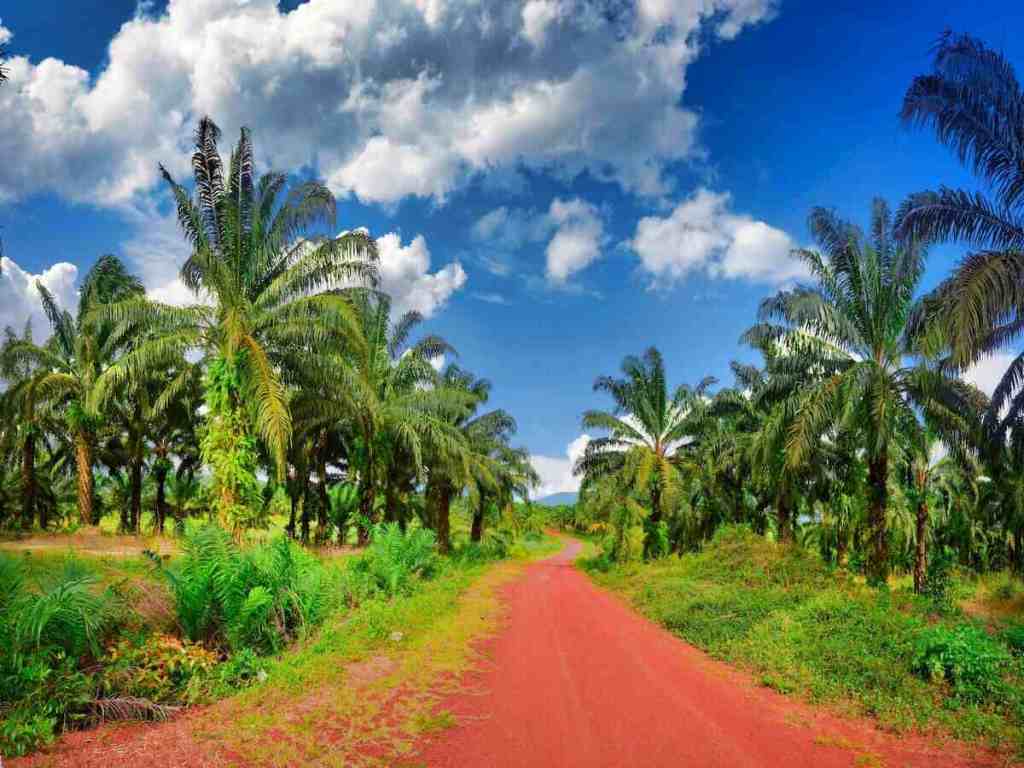
The human use of oil palms is believed to date back as far as 5,000 years. In the late 1800s, archaeologists discovered a substance in a tomb at Abydos that they concluded was originally palm oil which dates back to 3,000 BC. It is thought that Arab traders had brought the oil to Egypt. Due to the quite large quantity of oil that was discovered, it is thought that the oil was likely used for dietary purposes.
When Europeans arrived on the Guinea coast in the 15th century, the significant local consumption of palm oil did not go unnoticed. When merchants began trading slaves, and shipping them across the Atlantic, they purchased palm oil as food for their human cargoes. Then, when the Atlantic slave trade was outlawed in 1807, the British government encouraged traders to capitalize on pre-existing connections with dealers in the West African interior and adopt palm oil as an alternative commerce. Further encouragement was added in 1845 when the British government abolished the duty on palm oil.
The British Industrial Revolution created a distinct requirement for palm oil for candle making and as a lubricant for machinery. As a result, West African farmers began a modest export trade supplying palm oil at the beginning of the early 19th century.
From the 1900s onwards, European-run plantations were established in Central Africa and Southeast Asia, and the world trade in palm oil continued to grow slowly, reaching a level of 250,000 tonnes (metric tons) per annum by 1930.
Before the mid-19th century, all palm oil was produced by hand in West Africa, where the oil palm is indigenous and has been closely linked with local livelihoods for thousands of years. However the Industrial Revolution caused a surge in demand for palm oil in Europe, and the need to secure reliable supplies led to the development of oil palm plantations. Throughout the colonial and post-war eras, foreign investment drove the intensive expansion of these plantations at the expense of indigenous people, forests, and wildlife. Things are not that different today, except that corporate actions are increasingly scrutinized by watchdogs, buyers, and investors, for whom unethical practices pose an increasingly high risk.
After World War II, further improvements in palm oil refining technology and transport methods made it possible to expand the use of palm oil in Western food products which had restricted palm use until that time.
Today, Southeast Asia is the center of global palm oil production – with Indonesia and Malaysia producing around 85% of the world’s supply. However, oil palms did not arrive there until 1848 when Dutch botanists planted four seedlings in the botanic gardens in Bogor (then Buitenzorg) on the Indonesian island of Java. A rapid expansion of the palm oil export trade followed from the 1960’s onwards and Malaysia emerged as the world’s largest producer. Early in the 21st Century Indonesia surpassed Malaysia as the world’s largest palm producer.
The history of palm oil in Indonesia

Through the 1960s, the deteriorating political situation in postcolonial West Africa led to a decline in palm oil exports, while Southeast Asia’s palm oil industry continued to rapidly expand. Engineers and researchers who had worked in West Africa made their way to Southeast Asia to foster development and expand the smallholding sector.
After Indonesia transitioned to Suharto’s New Order in the mid-1960s, the government began fully supporting foreign companies and investment in oil palm development. By the 1970s, around 150,000 hectares of plantation had been developed in the country. With further investment from the World Bank and the Asian Development Bank, this number grew to 600,000 hectares by 1985.
Across Southeast Asia in the name of socio-economic development, forests were cleared to make way for new oil palm concessions and other development projects. The industry ignited huge conflict over land, with thousands of indigenous and local communities displaced, not to mention forest and biodiversity loss.
As long as the commercial trade in palm oil has been controlled by companies, the commodity has been attached to conflict. This is because palm oil companies have nearly always prioritized profit over human welfare and the environment. Governments have supported this, favoring short-term financial gain from foreign investment at the expense of protecting their people and resources. Only when palm oil is produced with consideration for indigenous people, local communities, and the environment should it be considered sustainable. Though the use of certified sustainable palm oil is increasing, the industry still has a long way to go before the model of colonial profiteering is a thing of the past.
What is palm oil used for?

Grown only in the tropics, the oil palm tree produces high-quality oil used primarily for cooking in developing countries. It is also used in food products, detergents, cosmetics, and, to a small extent, biofuel. Palm oil is a small ingredient in the U.S. diet, but more than half of all packaged products Americans consume contain palm oil—it’s found in lipstick, soaps, detergents, and even ice cream.
Palm oil is a very productive crop. It offers a far greater yield at a lower cost of production than other vegetable oils. Global production of and demand for palm oil is increasing rapidly. Plantations are spreading across Asia, Africa, and Latin America. But such expansion comes at the expense of tropical forests—which form critical habitats for many endangered species and a lifeline for some human communities.
Palm oil is an edible vegetable oil that comes from the fruit of oil palm trees. It’s cheap and efficient making it the world’s most widely used vegetable oil – and global consumption is rising.
Palm oil is used in the production of foods such as cake, chocolate, biscuits, margarine, and frying fats. It is also found in cosmetics, soap, shampoo, and cleaning products and can be used as a biofuel. Up to 50% of products in an average UK supermarket now contain palm oil!
It is a very versatile oil and has different properties and functions for use in a variety of products (from soaps to chocolate). It can be a liquid or a solid which gives it an advantage over other oils.
Its smooth and creamy texture and absence of smell make it a desirable ingredient in many recipes, including baked goods (such as biscuits), and it can be semi-solid at room temperature which is a property needed to keep butter and margarine spreadable. It has a natural preservative effect which extends the shelf life of food products.
The environmental impact of palm oil
Deforestation is the main reason why palm oil is controversial. Booming production means that more land is needed for new plantations. This does not necessarily result in forest clearing, as oil palms can be planted on degraded land or land previously used for other crops. However, scientific studies cited by the European Commission in 2019 suggest that 45 % of the land area covered by new plantations is on formerly forested land, a much higher share than for other oilseed crops such as soybean (8 %) and that between 2008 and 2011 palm oil caused 4 300 km2 of deforestation worldwide. A second study from 2019 points to oil palm plantations as the single biggest cause of deforestation in Indonesia, accounting for nearly a quarter of permanent forest clearing in the country between 2001 and 2016.
Deforestation is a major concern for several reasons. Compared to rainforests, oil palm plantations support only one-quarter as many animal species. By eating into the habitats of the orangutan and Sumatran tiger (both critically endangered species) as well as numerous smaller animals, they threaten biodiversity. At the same time, oil palms have less than 20 % as much above-ground biomass as rainforest trees, and a correspondingly lower capacity to absorb carbon dioxide from the atmosphere.
Greenhouse gas emissions go up when oil palms are planted on carbon-rich peaty soil – which is the case for around one-fifth of new plantations. Draining such soils, which is necessary for the oil palms to grow, exposes the peat to oxygen, causing it to decompose and release huge quantities of carbon dioxide into the atmosphere over many years. Peat drainage in southeast Asia is estimated to cause the equivalent of 2 % of global fossil fuel CO2 emissions. Fires on dried-out peat, which are very hard to put out, release thick clouds of choking smoke into the atmosphere. In Indonesia, around one-fifth of such fires are directly linked to palm oil. Some of Indonesia’s worst fires to date were in 2015. For several weeks, Indonesia became the world’s biggest greenhouse gas emitter, as fires destroyed an area almost the size of Belgium. Choking haze spread as far as Singapore, costing the Indonesian economy at least US$16 billion and causing up to 100,000 premature deaths.
As the world’s largest producer of palm oil and one of the countries worst affected by deforestation, Indonesia has taken several steps to make palm oil more sustainable. Since 2011, Jakarta has stopped issuing new concessions for clearing forests in primary (i.e. old-growth) forests and on peatland; moreover, since the peak fire year of 2015, concession-holders have been required to protect and rehabilitate peatland areas. Despite this, the country lost over 10,000 km2 of forests a year between 2017 and 2019, partly due to oil palm cultivation. The good news is that this is still less than half the record deforestation rate of 24,000 km2 in 2016. Deforestation has also slowed down in neighboring Malaysia, the other main producer, which has a long-standing commitment to keeping at least half of its land area under natural forest cover.
Several certification schemes for sustainable palm oil exist, of which the most widely used is that of the International Roundtable on Sustainable Palm Oil (RSPO). To be RSPO-certified, palm oil must not come from land that has been cleared by fire or by destroying primary forests. Moreover, since November 2018, the scheme excludes new plantations on peat soil. Opinions on the RSPO are divided: the World Wildlife Fund sees the scheme as an ‘essential tool’ in the drive to ensure that palm oil does not cause deforestation; on the other hand, Greenpeace claims that RSPO standards are not strict enough and that in any case, not all participants in the scheme meet their commitments. Besides, less than one-fifth (19 %) of global palm oil production is certified by the RSPO as sustainable.
What were the largest companies using palm oil?

Palm oil is quickly becoming a hot-button issue in the sustainability space, and for good reason. The growth in palm oil plantations is among the most serious causes of deforestation in tropical regions. As consumers become more aware of palm oil-related deforestation, a select few companies are leading the charge and making bold commitments to sustainable sourcing. There’s still more work to be done.
Nestlé. Pushed by an aggressive Greenpeace campaign, in 2010 Nestlé committed to a global no deforestation target by 2020, alongside other members of the Consumer Goods Forum. Nestlé is the largest food company in the world but is only a tiny player in the global palm oil market, yet deforestation connected with the ingredient means the target has become a key priority for the company.
The company’s trailblazing partnership with its leading palm oil suppliers, Golden Agri Resources (GAR), and The Forest Trust (TFT) is a shining example of how sustainability collaboration can drive dramatic change.
Unilever is one of the world’s largest buyers of palm oil with about 1.5 million tons purchased annually (or 3 percent of global production), but fortunately, it is now also one of the world’s greenest buyers. The company reached its target of 100 percent certified sustainable palm oil covered by GreenPalm Certificates in 2012, three years ahead of its original schedule.
Taking things a step further, the company made another commitment in 2013: All palm oil bought will be traceable to known sources by the end of the year.
Kellogg’s. The packaged food sector has the strongest palm oil commitments overall, according to a recent report from the Union of Concerned Scientists. Kellogg’s is an industry leader, having recently committed to a zero-deforestation policy with full traceability by 2015.
Starbucks. Green Century Balanced Fund, an environmentally responsible mutual fund, filed a shareholder resolution against Starbucks due to concerns that some of the company’s palm oil suppliers used deforestation practices.
In response, the coffee giant announced that it will purchase all palm oil from suppliers with sustainable certification by 2015. A Starbucks spokesperson had this to say: “I can confirm that our products in the U.S. and Europe currently use RSPO-certified palm oil and we have committed to extending our use of RSPO-certified palm oil to 100 percent of our products globally by 2015.” Some have pointed out the shortcomings of RSPO, but this is certainly a good first step.
L’Oreal, the parent company of brands like Kiehl’s and The Body Shop, is one of the top dogs in the personal care sector when it comes to sustainable palm oil sourcing. It ranked the highest among its competitors in the Union of Concerned Scientists’ recent Palm Oil Scorecard for its commitment to buying traceable deforestation- and peat-free palm oil.
Mars, Inc., the manufacturer of the popular chocolate candy bars Mars Bar, 3 Musketeers, and Twix announced its commitment in March to transition to 100 percent certified sustainable palm oil in its products by the end of 2014.
“We will continue to source 100 percent RSPO mass-balance certified palm oil, but we are now strengthening our commitment as follows to ensure this palm oil is genuinely sustainable,” the company said in its press release. To do this, it plans to “go beyond the RSPO criteria” by setting its benchmarks for suppliers.
Hershey’s is making bold strides towards sustainable sourcing in its own right. The company committed to using 100 percent RSPO-certified palm and palm kernel derivatives in 2011 and reached that goal – one year ahead of its 2015 target.
“We believe that certifying both our palm oil and palm kernel derivatives puts The Hershey Co. at the leading edge among consumer products manufacturers in this important area of palm certification,” a Hershey’s spokesman told Triple Pundit in an email.
In December, Hershey’s announced it would go beyond RSPO certification and work with its suppliers to achieve 100 percent traceable and sustainably sourced palm oil by the end of 2014, one of the most progressive palm sourcing commitments in the packaged goods industry.
You may not know Mondelēz by name, but you’ll surely recognize its benchmark brands like Oreo, Nutter Butter, Ritz Crackers and Honey Maid. A leader in the packaged goods sector, Mondelēz plans to purchase 100 percent certified sustainable palm oil (CSPO) by 2015 and has a commitment to 100 percent transparently sourced, traceable palm oil which does not contribute to deforestation or loss of peatland by 2020.
Procter & Gamble committed to a no-deforestation policy in April 2014 as a result of a public campaign by Greenpeace. P&G’s new policy builds on the existing RSPO criteria and includes the protection of peatland.
“Greenpeace will continue to engage with P&G to ensure that this policy is implemented before 2020 and effective action is taken to deal with problematic suppliers,” the group said on its website.
Reckitt Benckiser. The maker of personal care products like Clearasil and Calgon, has committed to tracing palm oil back to its origin and asking suppliers about the GHG footprint of their production. The company has also committed to using 100 percent RSPO-certified palm oil by 2015 and using 100 percent physical CSPO by 2020.
 Things we do for health