Everybody likes Starbucks. Or maybe not lately. It’s such a popular international brand that you think that maybe nothing can go wrong with them. They appear friendly, have great coffee, and their space is perfect for reading a book or joining a Zoom call. Simply perfect.
But lately, even Starbucks has been having some difficulty. Even before the boycott, there were scandals and protests against this international giant. Today with 34,000 locations in more than 80 countries in the world Starbucks is the most recognized brand next to Coca-Cola or Pepsi, McDonalds’ or Burger King. So what could possibly go wrong with selling coffee? I mean that is probably the most harmless thing in the world. And everybody enjoys their warm cup in the morning. Just check out the long lines in your nearest Starbucks before opening business hours and you will see that we are a coffee nation. I mean even the plans for the American Revolution were discussed in coffee houses. The London Stock Exchange was originally created in a coffee house. Isaac Newton once dissected a dolphin at the table of one of his favorite coffee shops. So it’s no surprise that people felt attracted to sitting in cozy Starbucks seats, listening to relaxing piano music, and enjoying a cap of frozen caramel latte. But as often happens big companies would do anything they can do to earn the extra buck. And this is how Starbucks does it.
The first Starbucks
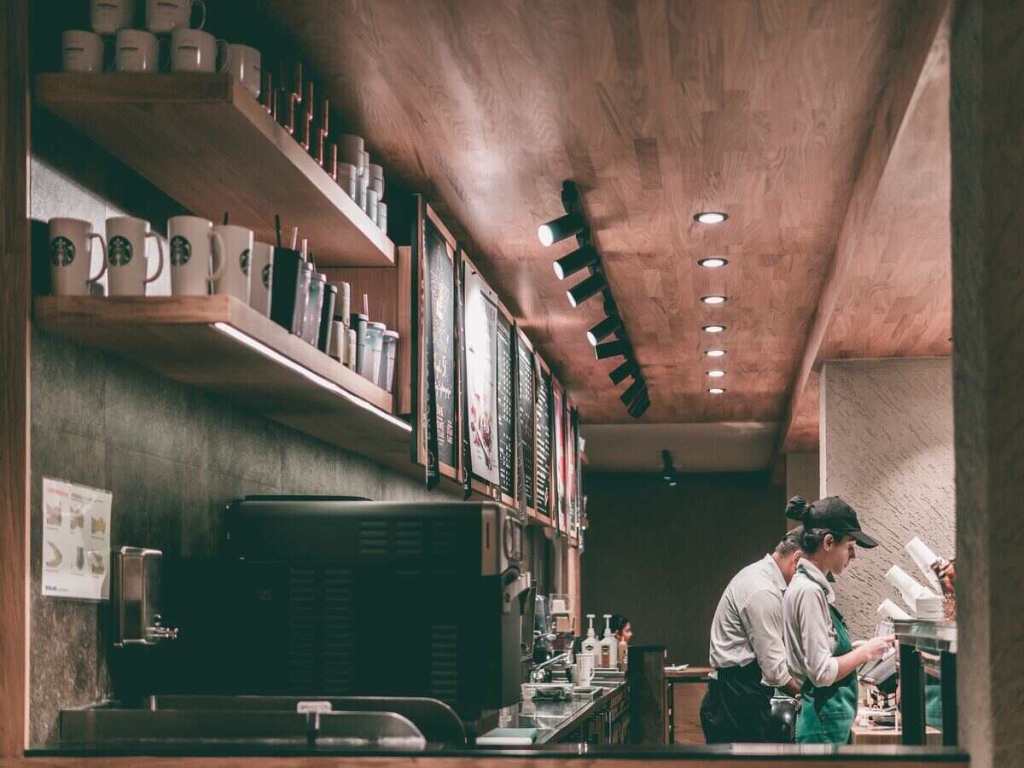
In 1971, Jerry Baldwin, Zev Siegl, and Gordon Bowker, all former San Francisco University students, founded Starbucks adjacent to Seattle’s renowned Pike Place Market. They are known as the founders of Starbucks. Although they were devoted to providing high-quality coffee beans and roasting equipment, they were unaware of how prosperous their company would become. Howard Schultz got the chance to acquire the business from the founding shareholders in 1987. He began to grow the company by creating other locations outside of Seattle.
Beginning in the 1980s, Starbucks built four outlets in Seattle, setting themselves apart from the competition with their superior freshly roasted coffee. The two surviving partners were left alone when Siegl opted to pursue other opportunities in 1980, and Baldwin took over as president of the business.
Owners sold the firm to Howard Schultz in the early 1980s, who wanted to turn the coffee bean outlet into a coffee house offering espresso-based beverages after going on a business trip to Milan, Italy. After buying Starbucks, Howard Schultz’s net worth became about $ 3.4 billion. Under large-scale administration partnerships, Starbucks grew to become the world’s largest coffee-house chain. In 1992, Schultz utilized a $271 million valuation to treble the number of stores in a series of widely publicized coffee wars. In 2000, he stepped down as CEO and was succeeded by Orin Smith.
On March 30, 1971, Starbucks started in Seattle, Washington. The business had six outlets in Seattle by 1986. 46 Starbucks locations could be found in the Midwestern and Northwest Territories by 1989. Starbucks obtained the right to use, create, promote, and sell the “Frappuccino” in 1994.
Starbucks paid AFC Enterprises $72 million in April 2003 to purchase Seattle’s Best Coffee and Torrefazione Italia. In 2013, customers used the Starbucks app on their mobile devices to make more than 10% of their in-store transactions. Starbucks declared on March 21, 2018, that it contemplated using blockchain technology. The corporation operated 33,833 locations as of November 2021, with 15,444 of them being in the United States.
The coffee bean scandal
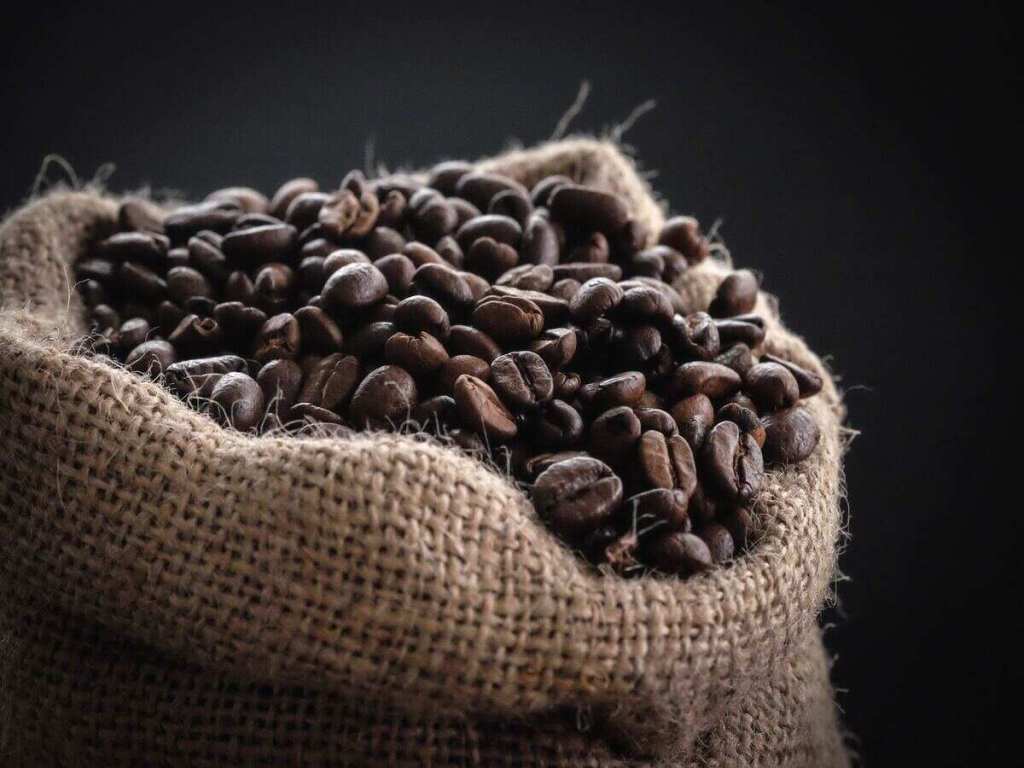
A new investigation by Channel 4’s current affairs program Dispatches has revealed that coffee chain giants Starbucks and Nespresso are sourcing their beans from suppliers who are using child labor. The television exposé showed children under 13 working 40-hour weeks in substandard conditions on farms in Guatemala and being paid a daily wage little more than the price of one latte.
Throughout the show, the team visited 12 farms in the country, with 7 of those linked to supplying Nespresso and 5 linked to Starbucks. All 12 farms found evidence of child labor.
They were paid depending on the quantity of beans they picked with sacks weighing up to 45 kilograms. Typically, each child earns less than US$6.40 a day, which is equivalent to some of the lattes offered by Starbucks and Nespresso’s menus.
Responding to the fresh allegations, Nespresso’s chief executive Guillaume Le Cunff issued a statement saying that the company upholds “zero tolerance” over child labor, will be launching an investigation into the farms and will cut purchases of coffee from farms in Guatemala until it is over.
Starbucks issued a similar declaration, telling the Dispatches team that they have “launched a full investigation into the claims” but later said that they have “not purchased coffee from the farms in question during the most recent harvest season,” though they have previously sourced from them in 2019.
While awareness about the association between coffee bean farms and human rights abuses has led to the proliferation of Fairtrade and other ethical coffee accreditations in recent years, these certifications do not always guarantee that the beans are responsibly produced. According to a study by London University SOAS, there are multiple regions where the Fairtrade Foundation is unable to ensure that workers get paid a reasonable living wage, especially in Ethiopia and Uganda.
Aside from a problematic social record, mass-produced coffee supplying well-known brand names also leaves behind a massive environmental footprint, from deforestation for land used for plantations and the use of agrochemicals in the supply chain to excessive packaging waste on the consumer end.
The environmental impact of coffee production
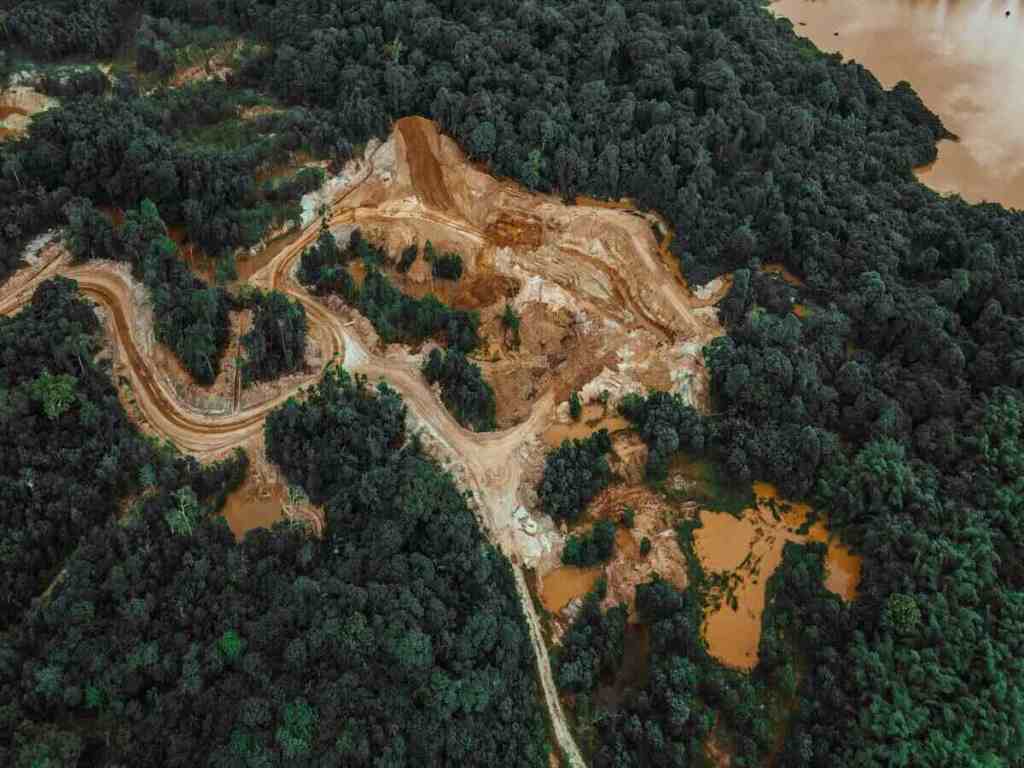
Coffee production is linked to deforestation. The conversion of coffee production to sun-grown coffee is a major source of deforestation since the forest is cleared to make room for coffee plants. According to some estimates, every cup of coffee consumed destroys roughly one square inch of rainforest, making it a leading cause of rainforest destruction.
The clearing of forests reduces biodiversity and plays a critical role in the extinction of species Coffee production is highly water-demanding The coffee required for one single cup of coffee takes 140 liters of water to produce.
Climate change is affecting coffee production. Over the next decade, climate change could have a huge impact on the production of coffee and the people who rely on coffee for their livelihoods. Areas affected include the major coffee-producing countries of Nicaragua and Tanzania. Nicaragua could lose the majority of the country’s growing areas by 2050 and Tanzania could reach critically low yield levels by 2060.
Coffee is not just coffee There are huge differences in how sustainably and ethically coffee is produced. Coffee produced without the use of slaves, child labor and pesticides is widely available. Shade-grown coffee requires fewer pesticides and fertilizers than sun coffee – partly because it provides a habitat for birds and insects that eat coffee-plant pests.
Among the top 10 largest producers of coffee in the world are the countries that have been battling deforestation, pollution, water shortage, drought, and low financial income per capita. Starting from Brazil, Vietnam, Columbia, Indonesia, Honduras, Ethiopia, Peru, and India. These are all countries that have been losing the battle with clean water sources for their citizens. Ethiopia as one of the poorest countries in the world keeps producing coffee even if its people are dealing with a lack of clean drinking water.
It is unimaginable that natural resources are being diverted from its own citizens just to produce coffee and sell it to international brands like Starbucks. Even if Starbucks doesn’t specifically say from which country they import the coffee they admit only the regions of Latin America, Africa, and Asia/Pacific.
Starbucks coffee has more sugar than soda
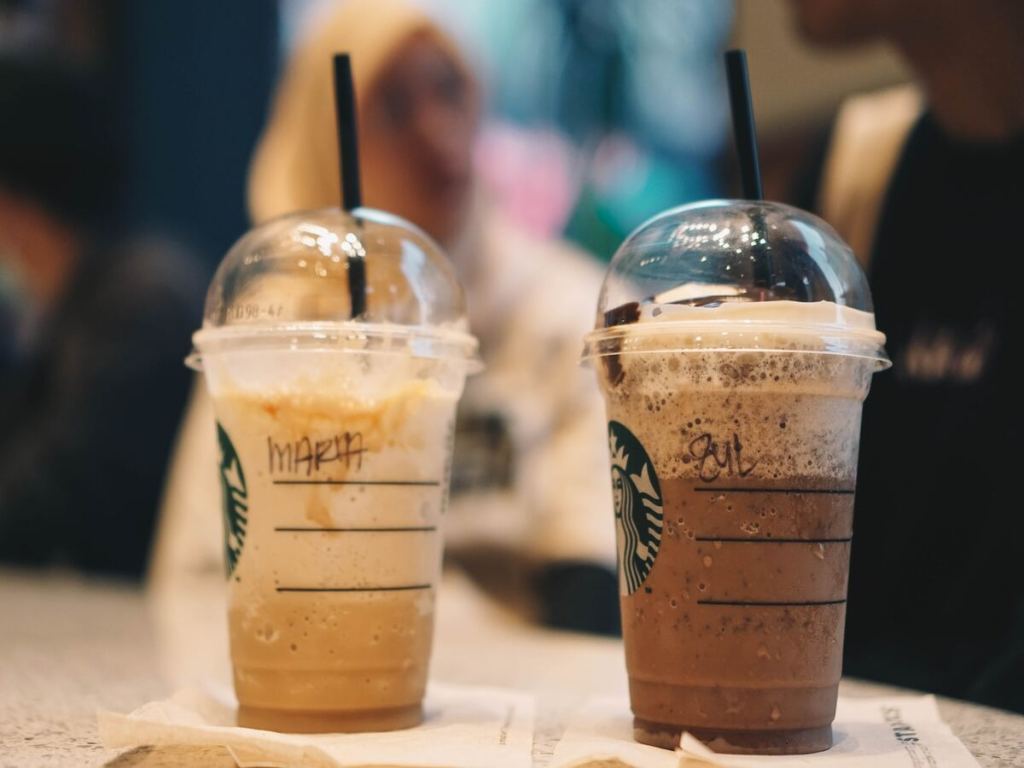
Everybody has their favorite Starbucks coffee. It can be hot or frozen. Filled with hazelnut, caramel, or any other flavor, cream, milk, or even green tea. There are many choices and you can really have it all. While most of us think of coffee as something healthy that doesn’t really negatively impact us you will have to think again.
A can of Coke has 140 calories, 39 grams of sugar, and 0 grams of fat. While a white chocolate mocha from Starbucks has 430 calories. 53 grams of sugar and 18 grams of fat. While a caramel frappuccino has 380 calories, 54 grams of sugar, and 16 grams of fat. And that’s just two examples. About 98 % of Starbucks hot flavor drinks contain excessive amounts of sugar per serving. According to tests of 131 drinks. More than a third contain more sugar than or as much sugar as a can of Coke. 20 years ago people used to wake up with a Diet Coke or a Diet Pepsi. At around 2 o’clock they would have another and take a break. Today you can walk in front of the Starbucks at those same times and tell me how long the lines are. Starbucks has successfully replaced soda and no one has been the wiser.
After this information, it’s not surprising that people are getting addicted to Starbucks. They are addicted to the sugar that is being put into their drinks. Starbucks has become so much more than a place to have a cup of coffee. It has long time transformed into an international company that cares about making a profit and not about the fair trade of its products. Especially now in recent months when Starbucks employees have started to organize themselves into unions. The company has spent thousands of dollars on lawyers and even closed stores of unionized workers to try to destroy the movement. Have this in mind the next time you come and buy their coffee.
The battle of Starbucks and unions
Senator Bernie Sanders accused Starbucks of running “the most aggressive and illegal union-busting campaign in the modern history of our country” when the coffee chain’s founder and former CEO, Howard Schultz, testified in front of a Senate committee in March.
The latest figures from the National Labor Relations Board (NLRB) show just how aggressive that campaign has become as the board has continued issuing complaints and rulings against Starbucks’ response to unionization efforts. NLRB regional offices have issued 93 complaints covering 328 unfair labor practice charges against Starbucks since late 2021. Four NLRB board members, eight administrative law judges, and two federal judges have issued 16 decisions ordering remedies for unfair labor practices by Starbucks, including the reinstatement of 23 fired workers, though some decisions have yet to be enforced, according to the NLRB.
Starbucks also recently informed workers they intend to close two of the remaining Starbucks locations in Ithaca, New York after shutting down the third location in 2022, which workers have alleged was in response to union activity. All three stores had previously unionized, though Starbucks denied the closures were related to union activity, with the union filing for an injunction in federal court to halt the closures.
Workers at Starbucks have continued actions, including strikes, to pressure the company to bargain a first union contract with Starbucks Workers United, as the union continues to file more union elections at stores. According to the union, Starbucks workers have engaged in 453 strikes so far throughout the union campaign.
Starbucks Workers United has also alleged that Starbucks has not responded to or offered counter-proposals to the union in bargaining.
Starbucks and the union organizing its workers sued each other in a standoff sparked by a social media post over the Israel-Hamas war.
Starbucks sued Workers United in federal court in Iowa, saying a pro-Palestinian social media post from a union account early in the Israel-Hamas war angered hundreds of customers and damaged its reputation.
Starbucks is suing for trademark infringement, demanding that Workers United stop using the name “Starbucks Workers United” for the group that is organizing the coffee company’s workers. Starbucks also wants the group to stop using a circular green logo that resembles Starbucks’ logo.
Workers United responded with its own filing, asking a federal court in Pennsylvania to rule that it can continue to use Starbucks’ name and a similar logo. Workers United also said Starbucks defamed the union by implying that it supports terrorism and violence. Only time will tell if Starbucks will be successful in banning union workers from its locations.
 Things we do for health