Brewing beer is more of a local industry in the USA than it has ever been before. The US already passed the 7000 brewery mark and it seems like there is a craft brewery on every corner. But have you ever been to a brewery that seems really small and barely has any production space but they managed to keep 8 taps worth of beer rotating and supply all the local bottle shops? Well, that’s because brewers large and small often contract out some of their production to third-party brewing facilities to do some of their work. These contract breweries work with brewers to give them a boost in production if they don’t have the space or are in a different location to reduce their shipping costs. So where did the contract brewers come from? How many are there? And are there any drawbacks to contracting out your product?
The origin of contract breweries
After prohibition in the US, only a few hundred brewing companies managed to weather the storm and restart their operations. These breweries were ready to crank out some great beers but all the marketing work and great branding that existed before the prohibition now didn’t hold a lot of sway in the consumer’s minds. For many brewers who were barely scraping by it was much harder to relaunch a brand, build consumer trust and fight for market share with other desperate breweries.
So many brewery owners took an easier route. Contracting their brewing capacity out to other established brands to get a piece of their already successful branding. As a strategy for keeping your brewery operating this worked pretty well. For many brewers, it gave them a much larger buyer to sell to. And although their margins may have been a little lower their marketing and sales costs were almost nonexistent.
Costs of creating a beer brand

The next 50 years after prohibition lifted saw a significant consolidation in the brewing industry in the US. And many of these independent contract brewers were caught up in that wake. As brands like Miller, Coors, and Budweiser came to dominate the industry they began snatching up all of these contract breweries to expand their own production very quickly.
As such by the 1980s there were very few independent breweries left to take contracts in the US. Everything began to change with the lifting of the ban on homebrewing in 1978. Suddenly there were all sorts of great homebrewers popping up who wanted to take their craft to a commercial scale.
In the 80s that was way easier said than done. Banks and investors at the time weren’t exactly excited to get into the beer business. Back then you’d be hard-pressed to find an example of an independent brewery, much less a successful or well-known one.
Coming from a family of brewers, Jim Koch developed a really great Vienna lager recipe at home and wanted to take his Boston lager to a commercial scale. Now he could have spent months and years trying to secure a million dollars plus in funding. Apply for a ton of permits. Find and construct a space and then finally get into the brewing. But he found a more clever solution. Instead of going through the brewery start-up process. A process that really didn’t have a great model to follow in the 80s. He went to one of the few remaining contract brewers left. The Pittsburg Brewing Company.
They took his great recipe and began cranking out a lot of Sam Adams Boston lager. And instead of worrying about starting and running a brewery Jim could focus on selling and marketing his product to the drinking public. Although it was a little bit awkward for the first few years that Boston lager was being brewed in Pittsburg it was pretty clear that Jim had a hit on his hands. With that success, he turned his company into the largest craft brewery in the US. This story became increasingly common over the next 20 years.
Are there any drawbacks to contract breweries?
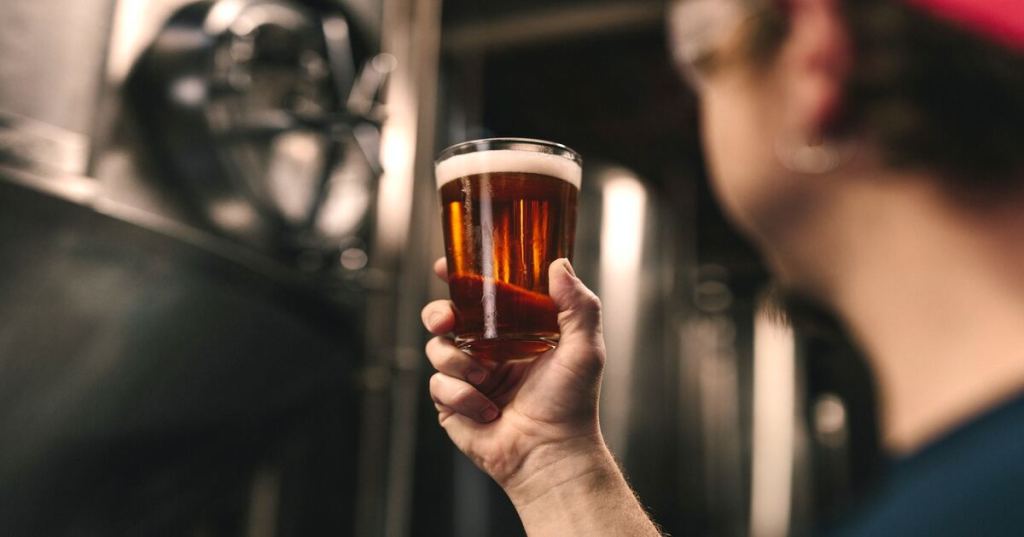
Many craft beer brands got their start with beer made in a facility that they didn’t own. Proving a quick way to profitability that made investors and banks more confident in lending money to new beer start-ups. Perhaps a bit ironically the craft beer revolution that is so focused on locally produced beer today has its heritage in outsourcing production to get your brewery off the ground.
For many drinkers using a contract brewer seems like cheating or at the very least that they may as well consider the beer the product of the contractor rather than the local brewer. As more and more people learn about the greater beer ecosystem in the US the negative stigma is slowly dissipating.
Contract breweries have allowed many great craft breweries to get off the ground without having to raise a million dollars in capital first. But some craft breweries use contract brewers long after they’ve already initially started. Even if you have your own brewing space it would be hard to keep a constant and engaging rotation of beers. In today’s marketplace craft consumers value variety. So you have a tough time getting by just making 3 or 4 great beers. Even if a beer lover enjoys your product over many competitors the craft consumer can quickly lose interest in having the same beer all over again. And if you’re a small brewery with limited capacity keeping drinkers interested in your lineup becomes a real challenge. So new breweries and small breweries use contract brewers to provide more options to the drinking public.
Turning over your recipe and brewing techniques to another entity that isn’t quite as invested in your success can be dangerous. However, as consumers in the US have become more concerned about the quality of their beer, contract breweries have stepped up their game. Transparency and collaboration are increasingly important factors in a brewer-contractor relationship within the modern beer marketplace. Some beer brands don’t even have breweries at all. They are produced entirely in production facilities owned by someone else. You might be drinking a great beer named after a local landmark, but that beer was actually produced hundreds of miles away. And while there’s nothing inherently wrong with that, some people who want to focus on buying and drinking locally may feel a bit jaded when they learn that. But as long as the brands are open and honest about how their beers are produced, I don’t see any problems using contract breweries to give drinkers more choices.
 Things we do for health