I know a lot of people that think that pickled foods also contain healthy probiotics. Most of them are not familiar with the process of pickling or fermenting food. Or they often think that fermented food is mostly dairy like cheeses and yogurt.
To understand the difference between these two food categories we will have to learn more about the process of how they are made and the ingredients used to make them. Fermented food is more healthy. But to be honest, if you have to choose between eating pickled or chemically processed foods my suggestion is to always choose pickled as your healthier option. I love pickled food myself. On more on the world of fermenting check Are All Fermentations The Same?
Are pickled foods more shelf stable?
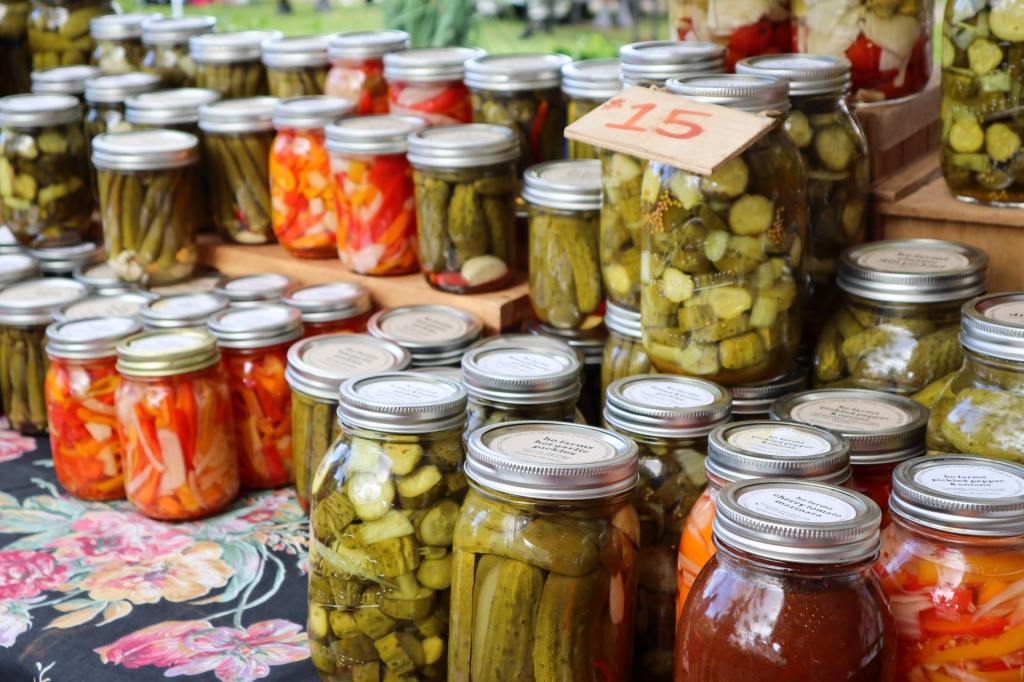
Pickled vegetables are prepared for long-term shelf stability at room temperature. Whether that be in a pantry or on a grocery store shelf. They are prepared for this long-term shelf-stable storage through a process called canning. Which is a high-heat sterilization process. High heat sterilization is also known as pasteurization. So pasteurization kills all the bacteria. Whether it be the good stuff, like the probiotics, or all the bad stuff. It kills everything. This is what is needed to ensure that your food doesn’t spoil at room temperature while being stored on the shelf for months to years. And they won’t need any refrigeration until they are opened.
Fermented vegetables on the other hand are not long-term shelf stable at room temperature. They do go through a fermenting process at room temperature for anywhere from 3 to 10 days. But after that time window, they are placed in a refrigerator for long-term storage.
So whether it be fermented vegetables or pickled vegetables so long as they are each prepared properly in their own right a fermented vegetable will be long-term refrigerator stable while a pickled vegetable will be long-term shelf stable.
The difference in preparation and ingredients
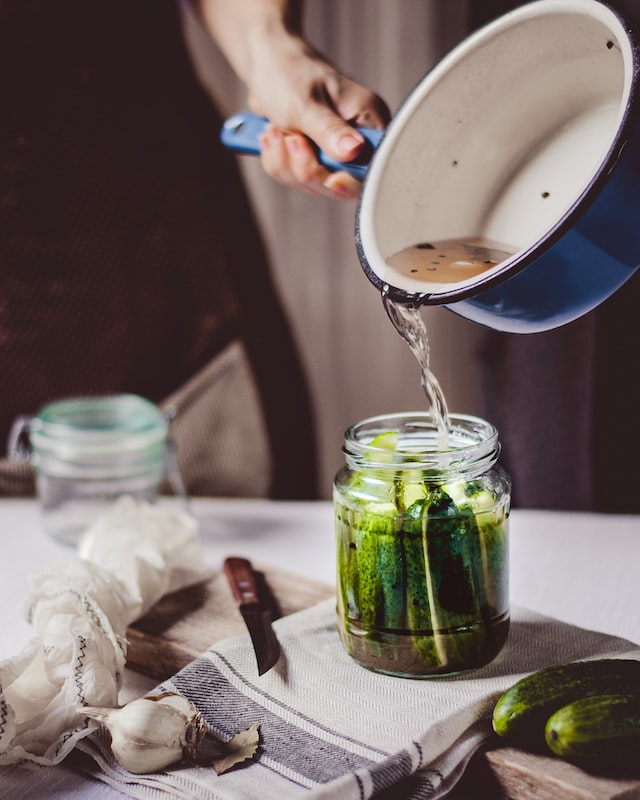
Brine is the liquid that the vegetable is stored in. I suppose you could also call it juice. However, it’s not a natural juice. It’s a human-prepared juice in a specific way. And that brine is going to be different whether you’re pickling or fermenting.
With pickling, the brine is made of specific things. Water, vinegar, and salt. And they’re combined at a specific ratio. The pickling brine is first pasteurized and then added to the jar of vegetables. Then after the lid is put on the jar it goes through a canning process. Home canners they may use a water bath or a pressure cooker to do this pasteurization process of complete sterilization. And the food industry will use their high-tech commercial equipment. But the result is the same. An ultra-pasteurized, completely sterilized shelf stable product. During this high heat pasteurization, slight cooking of the vegetable will occur.
With fermentation, the brine is made of two things, water, and salt. Also prepared at a specific ratio. But there’s no vinegar and no sugar. The brine is not heated nor pasteurized. And at room temperature, it’s then poured on top of the vegetable in the jar. During this process, the vegetables remain raw. Saltwater brine encourages and benefits the lacto bacteria also known as probiotics. It encourages them to grow and multiply.
So with pickling, if everything is done right with the pasteurization, canning, and the brine you’re going to have safe food to eat. With fermentation so long as everything is properly done you will have safe food to eat as well. But as you can see the preparation and the brine of each are very different from one another.
What are the health benefits?
Since pickled foods are pasteurized with high heat to kill all bacteria for safe long-term shelf stability there are no probiotics for gut health present in the canned pickled food. Fermented foods are not pasteurized and are prepared in a way that cultivates the proper bacteria, the probiotics. There are literally trillions of active probiotics for gut health per tablespoon of a fermented vegetable.
Most vitamins and polyphenols are heat sensitive. So with pickling, the vitamins and polyphenols are killed off with the pasteurization process. Minerals however can take the heat so some of them will remain in the pickled vegetable. Essentially the pickled shelf-stable food is dead food.
With fermented vegetables, the vegetable remains raw. There is no boiling or pasteurization of the brine. This means that the vitamins and polyphenols and minerals are all bioactive in fermented food. Not only they are still bioactive in the food, the lacto bacteria of the fermentation, the probiotics actually increase the bioavailability of the vitamins, polyphenols, and minerals.
A jar of fermented bioactive live culture fermented food from the grocery store’s refrigerator section can be costly. But that same jar can be made for pennies if you want to do it at home.
 Things we do for health
One Comment Add yours