For me, nothing says winter better than eating a bowl of sauerkraut. Since my childhood, it was the food of choice during the long winter months. It gave you enough plant-based nutrients combined with high levels of vitamin C and useful probiotics. It kept us healthy and gave us enough energy to go and play in the snow.
There was no winter without the tangy smell of a pot of sauerkraut cooking with some delicious beef ribs on my mother’s stove. So here we are to let you in on our fantasy. Make your first and hopefully not the last jar of this timeless delicacy. The recipe is super simple. The ingredients are super easy and the process will make you feel like a master fermenter in disguise. For more fermentation recipes try Making Apple Cider At Home – Easy Recipe.
Ingredients and equipment
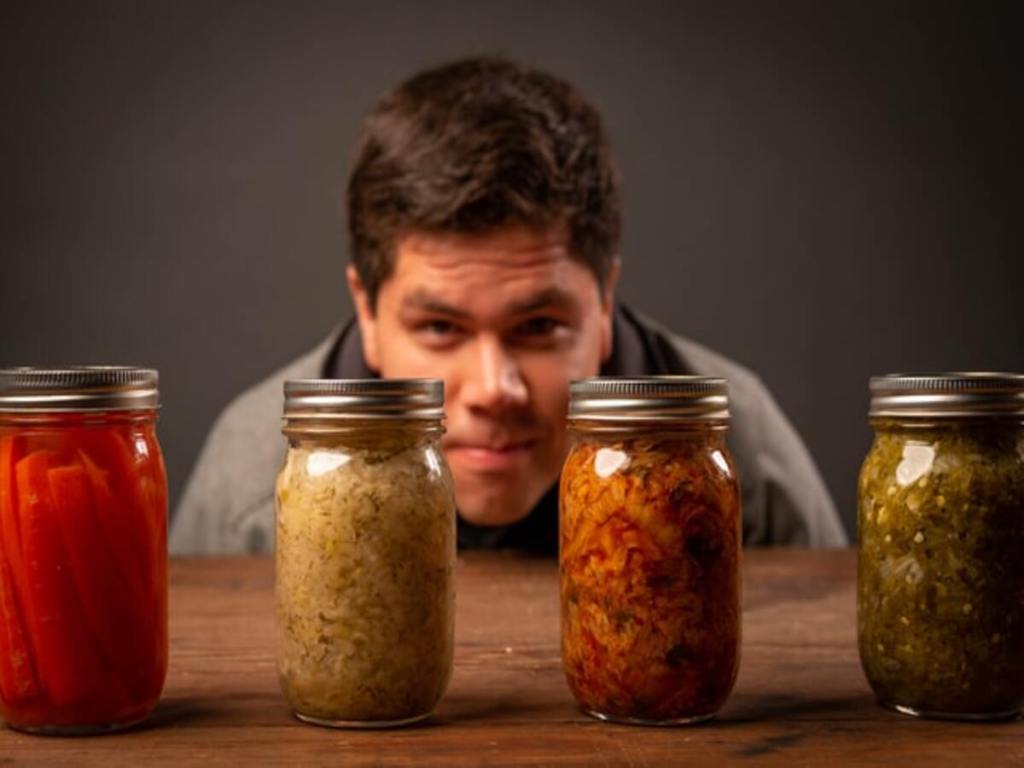
For the ingredients the list is very short and very simple:
- 1 medium sized green cabbage head
- salt
- spices such as pepper or caraway seeds (this is completely optional)
For the equipment please make a note that each and every part of the equipment needs to be cleaned and sanitized.
- a cutting board with a knife
- mixing bowl
- mason jar with a large enough size to fit all your cabbage
- cloth for covering the jar such as cheesecloth
- rubber bands or twine
Easy peasy process
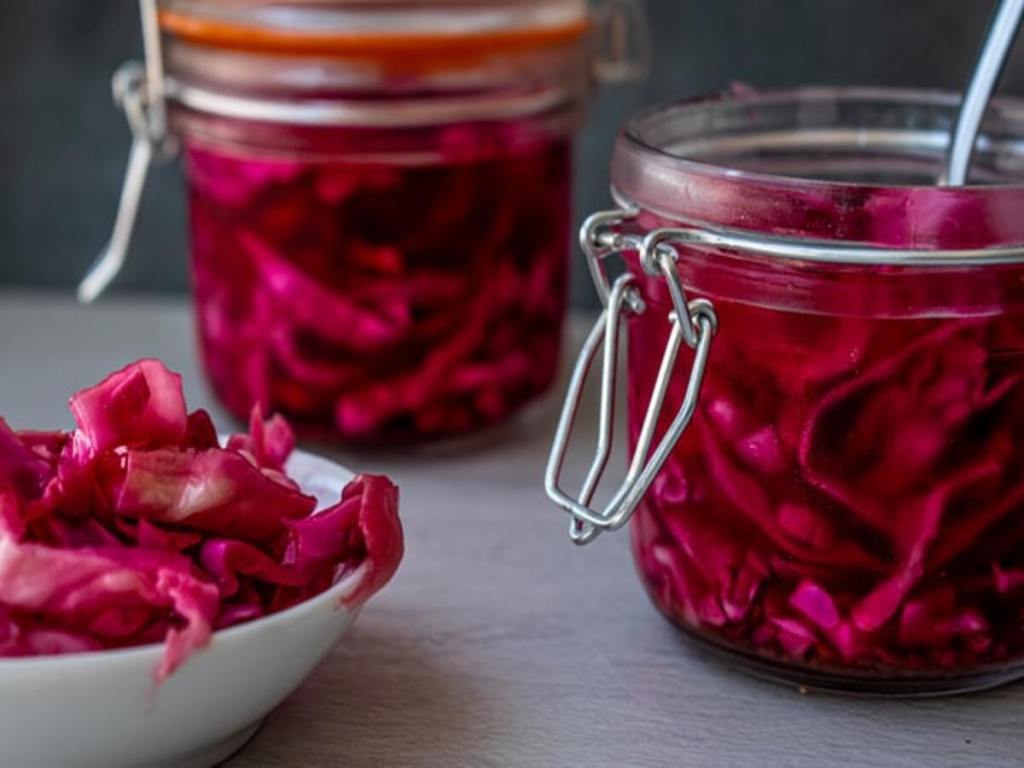
First thing first, you need to cut your cabbage. So start by discarding all the leaves that don’t look so well and trim out the core. You want to slice the whole head into 8 equal pieces. After that start by slicing each piece into thin ribbons and putting them into your mixing bowl.
Once the cabbage is sliced, sprinkle with salt over the top. You don’t really need that much salt. For the entire cabbage head, we would use around 1, 1/2 tablespoons of salt. By mixing the cabbage and salt with your hands soon the cabbage will start releasing some of the water and become withered. This will take 5-10 minutes. If you want to add any kind of spices the time to add them would be now.
Once the mixture is ready you want to start putting it into your mason jar. Be sure to pack it tight, not leaving much air in between cabbage. You can even push the cabbage down with your fist or a clean wooden spoon to make sure it goes all the way down. Pour all the liquid from the cabbage over it once you are done. It would be a good idea to make one big leaf of cabbage and cover the top with it. So the rest of the cabbage would stay submerged in the liquid.
Before closing the jar we would usually make sure to weigh the cabbage down. This would help the fermentation process to keep all of the cabbage submerged. So if you can take a smaller jar and put some marbles to weigh it down and just press it inside the larger mason jar that you are using. After that, you can cover the jar with cheesecloth and secure it with rubber bands. It’s a good idea to keep weighing the cabbage every couple of hours in the beginning as it starts to release more liquid. If after 24 hours the cabbage is not completely submerged in the water you can always add more salt water until it is.
What makes the cabbage ferment?
Fermentation can take from 3 to 10 days and there is no specific amount of time. As it ferments it is good to keep it from direct sunlight at a cool room temperature. You can start tasting it after 3 days and when it starts tasting good it will be ready. If you see white bubbles or white foam building at the top it means the fermentation is successful.
Later when you choose to eat your creation you can just take the foam out with the first layer of cabbage. The fermentation will start because of the bacteria on the surface of the cabbage. Lactobacillus is responsible for making ordinary cabbage into delicious sauerkraut. After the cabbage ferments to your liking, you can keep it in your fridge to stop the fermentation from going further. You can keep it in the fridge for around 2 months. Just be sure to keep it closed and if you see any black or pink mold in the jar it’s time to throw it away.
 Things we do for health
One Comment Add yours